
Buy PDF guide

Buy PDF guide — 10.71 USD

PDF — 10.71 USD

Triglav Park

Triglav Park

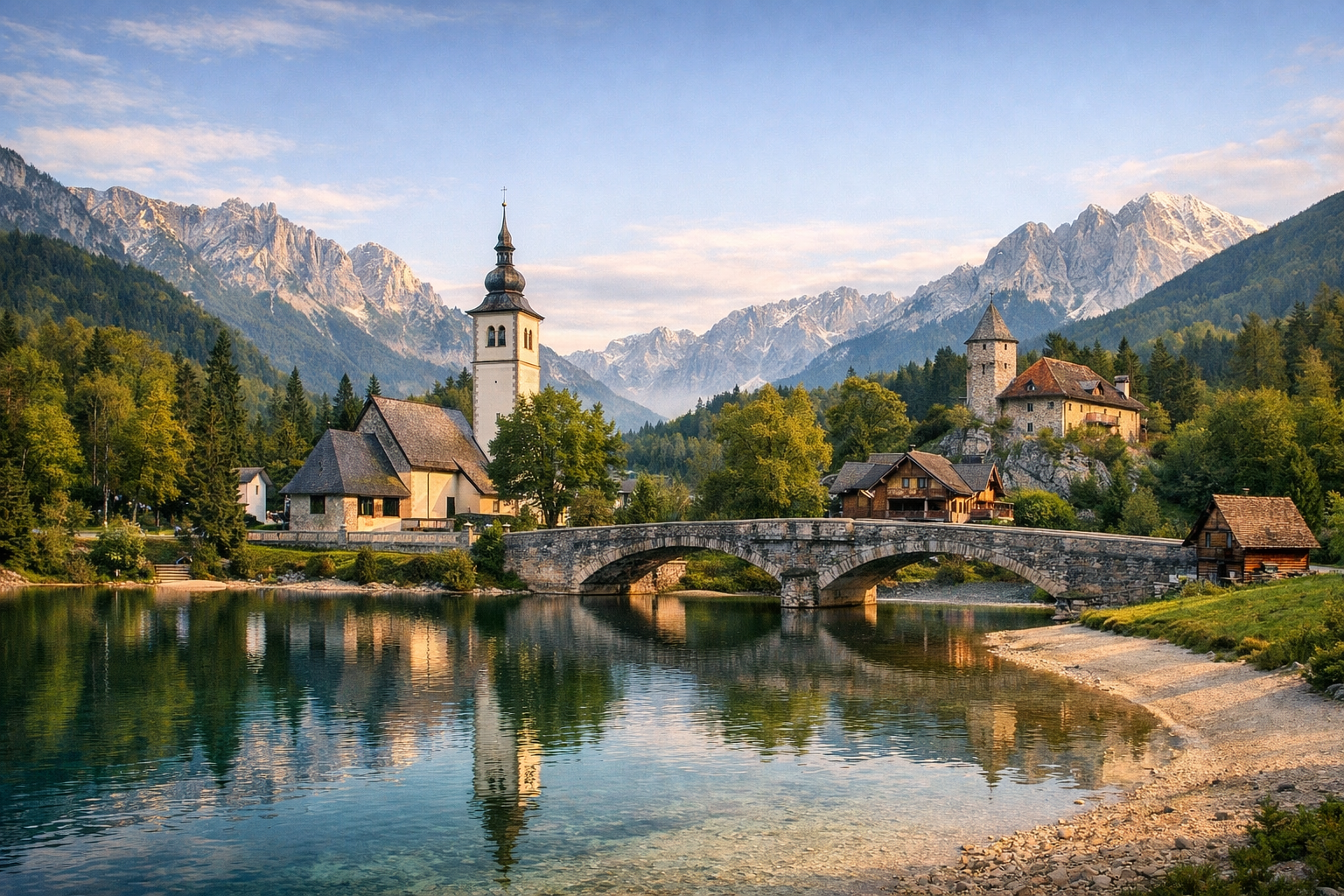
Triglav Park is Slovenia at its wildest, where Bohinj’s clear waters give way to the high forests of Pokljuka and the dramatic peaks beyond. Follow the journey through alpine valleys and mountain villages to Kranjska Gora, with every stop framed by crisp air, rushing rivers, and unforgettable views.

🥾 DAY-BY-DAY ROUTE

Ready-made country and city routes with daily plans, sights, transport and accommodation. Buy PDF guides for independent travel.

🥾 DAY-BY-DAY ROUTE


Day 1 — Bohinj: lakeside walk around Lake Bohinj and Ribčev Laz

  • 🥾 On the first day, it’s best to ease into the rhythm of Triglav Park with a lakeside and forest walk at Lake Bohinj — the largest natural lake basin in Slovenia. This is a relaxed route for regular travelers: you can skip the full loop and walk the most scenic stretch along the shore from Ribčev Laz to Ukanc and back, or do an almost complete circuit of the lake on marked trails and paths. The active part of the day usually takes 3–5 hours depending on your pace and the length of the loop you choose; difficulty is easy, elevation gain is minimal, and the distance is roughly 8–12 km. Along the way there are wooden boardwalks, shady forest sections, wide views over the water, and the massifs of the Julian Alps. This kind of day is excellent without special gear because the trails are popular, straightforward, without exposed sections, and without the need to climb high into the mountains. In the warm season, it’s important to start early: the lake gets busy during the day and the open shores are hotter; after rain, some sections may be slippery. If desired, part of the route can be shortened by boat or bus along the lake.


Day 2 — Stara Fužina and the Voje Valley: Mostnica Gorge + Voje Valley

  • 🥾 The second day is devoted to one of the most rewarding gorge and valley walks in the Bohinj area — Mostnica Gorge and Voje Valley. The route starts conveniently from Stara Fužina and follows a well-known trail through a stone gorge with turquoise water, narrow passages, and viewpoints, then opens into the calmer green landscape of the Voje Valley. For most travelers, the best option is 4–5.5 hours of active walking, with easy to moderate difficulty, approximately 9–12 km and about 200–350 m of elevation gain depending on how far you continue into the valley. This is a very suitable route without special gear: the trail is popular, marked, easy to follow, and the most impressive views are already on the lower and middle sections. An important seasonal detail: after heavy rain, rocks and wooden walkways can be slippery; in summer it’s best to carry enough water by midday, and in the shoulder seasons it’s worth checking visiting rules and trail conditions in advance.

Day 3 — Pokljuka: forest plateau, short trails, and an easy walk in Pokljuka Gorge

  • 🥾 The third day is best kept lighter and more forest-focused: head to the Pokljuka Plateau, where Triglav Park reveals itself not through high mountain terrain, but through conifer forests, karst landscapes, pastures, and gentle scenic walks. A realistic plan for an average traveler is a short walk around Goreljek and, if energy and weather allow, an unhurried introduction to the lower sections of Pokljuka Gorge. The active part usually takes 2.5–4 hours; difficulty is easy or moderate depending on the chosen length; distance is most often 5–8 km with a small or moderate ascent. This day works without special gear if you avoid routes leading to high peaks and stick to the known walking sections, where people usually go in ordinary trekking shoes. Pokljuka is ideal as a recovery day after the gorges and before the transfer: the air is cooler, the forest gives shade, and the views across the plateau feel calmer and softer. One important seasonal note: in colder weather and after snowfall, some forest trails may be wet, snowy, or less obvious, and summer shuttles and buses do not operate year-round, so schedules should be checked in advance.

Day 4 — Mojstrana: Peričnik Waterfall and a walk through Vrata Valley

  • 🥾 The fourth day is a transfer to the northern side of the park and a very photogenic but safe route in the format of waterfall + mountain valley. From Mojstrana it is convenient to go to Peričnik Waterfall, one of the most famous waterfalls in the Slovenian Alps, and then walk an easy section through Vrata Valley without ascending onto serious mountain routes. The active part of the day takes about 2–4 hours; difficulty is easy; distance is approximately 4–8 km depending on how long you continue through the valley after the waterfall; elevation gain is usually small. The climb to the lower waterfall is short and popular, while the valley itself lets you feel the scale of Triglav’s northern walls without entering the climbers’ zone. This kind of day suits an average traveler well: the main beauty is reached quickly, on marked and clear approaches. But proper footwear with good grip is especially important here: around the waterfall it is damp, and the section behind or beside the falling water can be slippery. After rain and in the cooler season, extra caution is needed, and you should not try to continue onto high mountain trails.

Day 5 — Kranjska Gora: Zelenci Nature Reserve, Lake Jasna, and a relaxed valley walk

  • 🥾 The final day is best made contemplative: this is a nature walk through lowland and lakeside locations in the Kranjska Gora area. Start with Zelenci Nature Reserve — the emerald source of the Sava Dolinka with wooden access paths and viewing platforms — then continue with a walk around Lake Jasna and along the flat valley paths. The active part of the day usually takes 2.5–4 hours; difficulty is easy; distance is about 5–9 km; elevation gain is minimal. This is an ideal finishing day without special gear: the routes are short, popular, and well suited to a calm pace, photography, and rest after the previous walks. There is no need here for complex navigation, helmets, or safety gear. The seasonal notes are simple: in summer Lake Jasna is crowded and sunny, so it is better to come in the morning or closer to the evening; after rain, the forest paths to Zelenci may be wet; in winter some sections become icy, so each step should be taken more carefully.

Flight tickets

eSIM for travel

Buy PDF guide

Buy PDF guide — 10.71 USD

PDF — 10.71 USD