
Day 1 — Inverness: a gentle start, walks along the River Ness, and preparation for the move
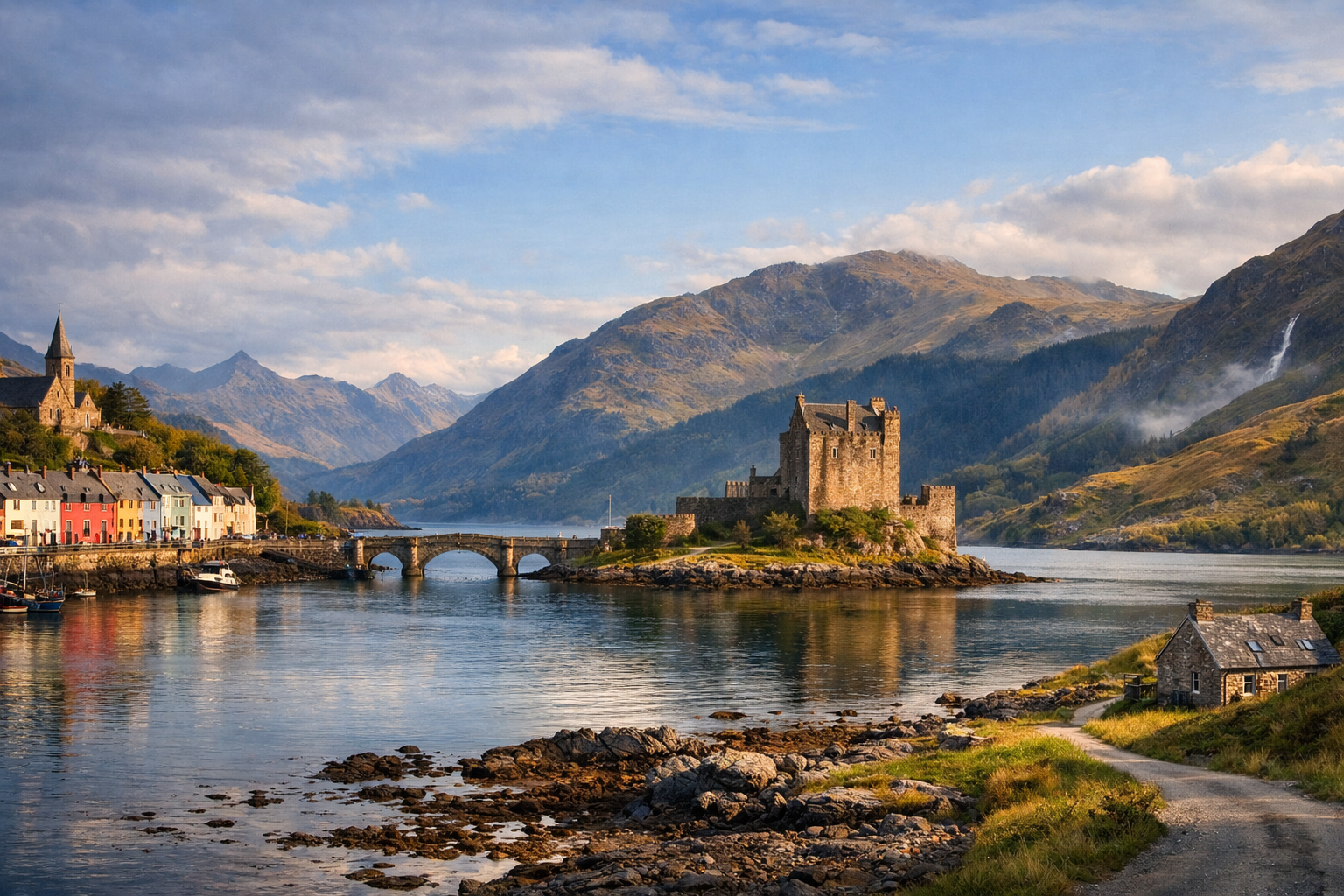
✈️ A logical starting point for the route is Inverness, the compact capital of the Highlands, where it is easy to adapt gently after a flight with a medium-sized dog up to 25 kg. It’s best not to overload this day with long drives: after the journey, your pet needs a rhythm of “went out, walked, drank water, rested.” The city is perfect for this: the River Ness embankments, Ness Islands, and green walking paths make it possible to stroll without steep elevation gain and without the bustle of a major metropolis. The air here is cool and damp, the light changes by the minute, and the river, bridges, and old stone facades create a very cinematic first impression of Scotland.
🐾 For a walk with a dog in Inverness, River Ness Walk, Ness Islands, and the area around Inverness Cathedral with its small bridges and shaded sections are especially convenient. This is a good day for a long “decompression” walk of 1.5–2 hours with breaks. If your dog is sensitive to new sounds, it’s better to avoid peak hours near the central streets and walk on the islands in the morning or closer to evening. In wet weather, the paths may be damp, so it’s worth carrying a towel for paws and a spare blanket for the room.
📋 Important UK pet entry rules should be treated as the essential foundation for the whole route. A dog usually requires a microchip, a valid rabies vaccination, a correct veterinary entry document, and for dogs also parasite treatment according to current UK entry rules. Since the details depend on the country of departure and the type of document, you must double-check the timing and paperwork format before booking tickets and visiting an official veterinarian: do not rely on old checklists or other people’s experience.
🚆 On UK railways, you can usually carry up to two pets free of charge if they are under control; dogs are expected to be kept on a lead, and other animals in a closed carrier. Pets are not allowed on seats in stations or on trains. If part of the route is suddenly replaced by a bus due to repair work, the rules may become stricter, and the boarding decision often depends on the operator or driver, so any rail replacement connections are best checked in advance.
🚌 On Stagecoach buses, pets such as dogs and cats are usually allowed, but this remains at the driver’s discretion, especially if there is already another animal on board or the bus is full. For a medium-sized dog, it is sensible to plan boarding outside rush hour, use a short lead, and carry a muzzle in case staff request it or conditions are crowded. For trips around the island this is especially important: even if the rules do not always require a muzzle, in practical terms you may need one.
🏨 In the evening — an early check-in at a dog-friendly hotel in Inverness, a calm dinner, and an early night. Pet policies in Scottish hotels vary greatly: some allow dogs to be left alone in the room only for a short time, some not at all; some permit pets only in certain rooms, and the fee may be charged per night or for the whole stay. Even if an accommodation clearly states that it accepts dogs, the conditions on weight, number of pets, and rules for common areas should be double-checked before paying for the booking.
🩺 If you want to settle the safety question on the first day, save the contacts of veterinarians in Inverness. For routine issues, it is convenient to keep MacLellan Vets Eastgate at hand, and for emergencies — Highland Vet Emergencies. In the Highlands, distances can be deceptive and the weather changes quickly, so it is best to keep a clinic list and opening hours offline on your phone.