
Buy PDF guide

Buy PDF guide — 6.90 USD

PDF — 6.90 USD

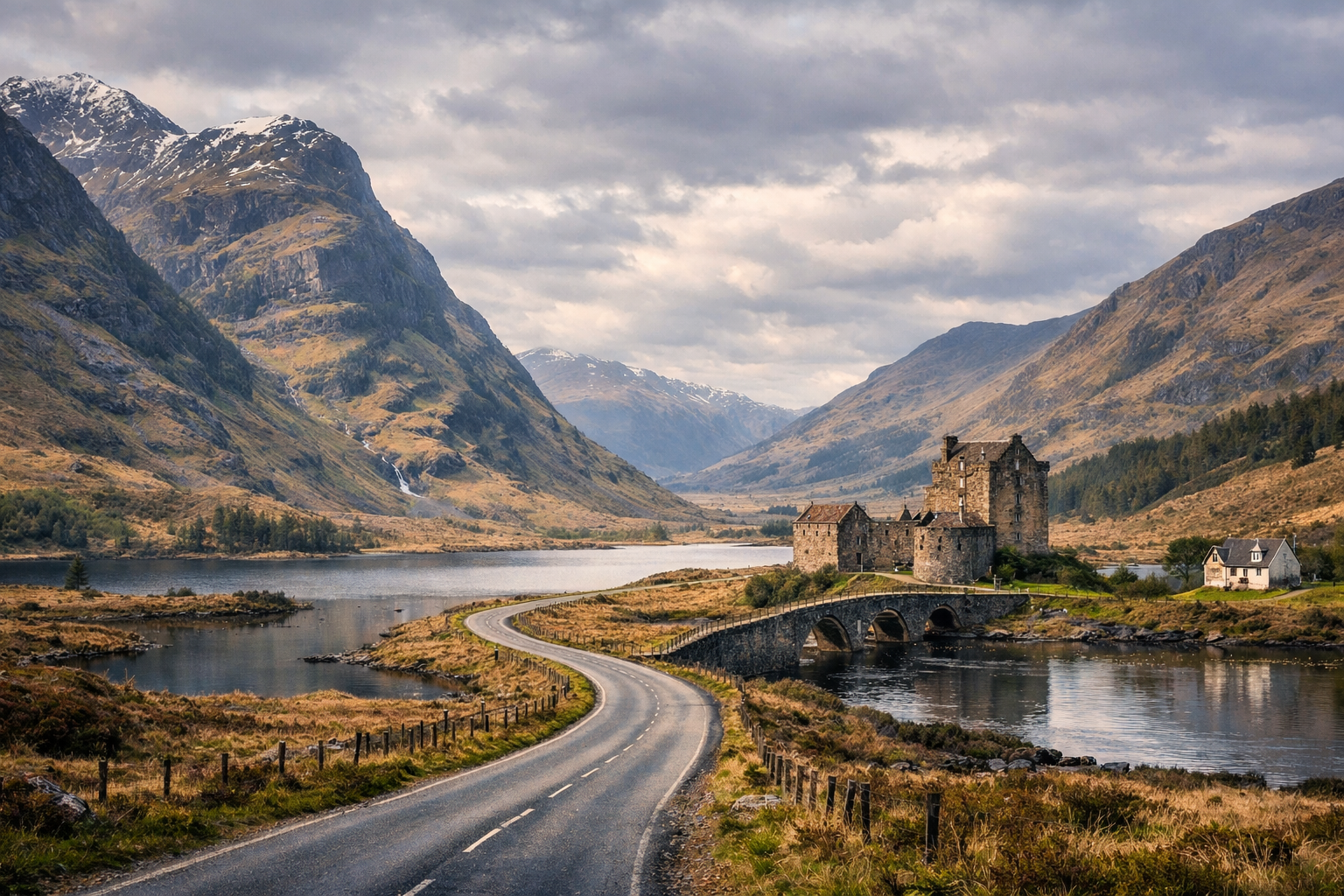
Scotland, Glencoe and Rannoch Moor. A driving route through the rugged mountain landscapes featured in the Harry Potter films, "Skyfall," "Braveheart," and historical dramas.

Scotland, Glencoe and Rannoch Moor. A driving route through the rugged mountain landscapes featured in the Harry Potter films, "Skyfall," "Braveheart," and historical dramas.

Drive into the wild heart of the Highlands, where the vast sweep of Rannoch Moor gives way to Glencoe’s dramatic peaks and glens. This unforgettable route winds through some of Scotland’s most cinematic landscapes, from Glen Etive and Fort William to the iconic Glenfinnan Viaduct.

🧭 DAY-BY-DAY ROUTE

Ready-made country and city routes with daily plans, sights, transport and accommodation. Buy PDF guides for independent travel.

🧭 DAY-BY-DAY ROUTE


Day 1 — Glasgow/airport → Rannoch Moor → Glencoe

  • 🚗 Drive: Glasgow Airport or central Glasgow → Glencoe Visitor Centre via the A82, about 2 hr 30 min–3 hr without long stops. This is one of the most beautiful driving routes in the country, but it requires attention: in places the road is narrow, stopping lay-bys are limited, and the weather can change sharply even in summer.

  • 🎬 Start the day not with chaotic photo stops, but at Glencoe Visitor Centre — the official gateway to the national nature reserve. This is the best way to understand which views you actually saw in films and which are simply associated with the region. In Glencoe itself, confirmed scenes were indeed filmed for several famous projects: episodes of the Harry Potter films were shot here, landscapes for Skyfall were captured here, and the glen is officially promoted as a screen location for Braveheart, Rob Roy, Outlaw King, and historical dramas. The visitor centre is a convenient place to pause after the drive, use the toilets, pick up a map of short walks, and check the current status of car parks, trails, and viewpoints for the day.

  • 🚶 Then continue along the A82 through Rannoch Moor and over the pass toward the famous Glencoe views. This very line of road and the surrounding wilderness create that almost otherworldly landscape which, in official Scottish tourist routes, is linked with Skyfall and the Harry Potter films. It is important to understand the distinction: Rannoch Moor is not a “Hogwarts-like set,” but a real natural area recognizable from scenes of travel through the western Highlands; what matters here is not one specific object, but the wide panorama of peat bogs, lochans, and distant mountains, which works on screen because of its scale and feeling of isolation.

  • 🎬 Be sure to stop around Buachaille Etive Mòr and at viewpoints along the A82 only where parking is permitted and safe. This powerful pyramidal massif has become one of the most recognizable film icons of the Highlands. In official filming-location route descriptions, it is linked with Skyfall, while the whole Glencoe massif is associated with Braveheart and several Harry Potter films. The landscape here is genuinely theatrical: dark slopes, abrupt ridges, fast-moving clouds, and the feeling that the road cuts through an ancient stone arena.

  • 🚗 After that, turn into Glen Etive — one of the key film locations of the trip. The narrow single-track road runs deep into the valley for dozens of kilometers, but even a short drive in gives you the very shot that James Bond fans come here for. Glen Etive is officially confirmed as one of the key Scottish locations of Skyfall. It is especially important here to treat the place with respect: this is not a theme park, but a living valley with passing farmers, anglers, and sparse traffic; overtaking, stopping on blind bends, and entering private land are unacceptable.

  • 🚶 Short walk of the day: choose 20–40 minutes around the visitor centre or one of the very short viewpoint detours near Glen Etive, without aiming for a long hike. The format of this route is a driving trip with short walks of moderate difficulty, so today the goal is not to “tick off kilometers,” but to absorb the cinematic quality of the landscape: almost every angle here looks like a frame from a historical epic or a dark spy film.

  • 🏨 It makes sense to spend the night in Glencoe so you do not have to retrace the same road the next day. A base around Kingshouse or Glencoe village is convenient because you stay right among the locations instead of spending daylight hours on extra driving.


Day 2 — Glencoe → Glen Nevis / Fort William → Glenfinnan → Glencoe or Fort William

  • 🚗 Drive: Glencoe → Fort William, about 30–40 minutes; then Fort William → Glenfinnan Visitor Centre, about 30–40 minutes one way. Overall, the day remains realistic even with stops, short walks, and a museum visit.

  • 🎬 In the morning you can pass through Fort William and, if you wish, make a short cultural stop at the West Highland Museum. It is not a film studio, but a real historical museum of the region that helps you “read” the context of the films and series shot in the western Highlands: Jacobites, clans, military history, harsh living conditions, and the romanticized image of the Highlands — all of this is directly connected to the image of Scotland that later moved into historical dramas and adventure films.

  • 🎬 The main goal of the day is Glenfinnan Viaduct and the Glenfinnan Monument area. This is not just a beautiful view, but one of the most unmistakably recognizable confirmed locations of the Harry Potter franchise. It is here that the train known to viewers as the “Hogwarts Express” crosses the viaduct among the green slopes and the waters of Loch Shiel. It is important and useful to distinguish facts: the viaduct itself and the panorama are real filming locations you can visit; meanwhile the train interiors, certain studio solutions, and some special effects were created separately, so a trip here is specifically an encounter with the film’s real exterior landscape.

  • 🚶 A walking path leads from the visitor centre to the viaduct viewpoint. It is not extreme, but it does require comfortable shoes, as the section is on dirt and can be slippery after rain. Allow time for a short round trip, with extra time for photos and waiting for the train if you want to catch the iconic shot. In high season the car park is overloaded, so it is better to arrive early. One more important point: do not try to access railway infrastructure or search for the “best angle” outside the official paths — this is both unsafe and harmful to the preservation of the site.

  • 🎬 Nearby is the Glenfinnan Monument and the National Trust for Scotland visitor centre — an official visitor space with an exhibition and services. Although Harry Potter is the main draw here for many, the location is also important as a historical site in Scottish memory. Because of this, the place feels deeper than a simple “movie photo spot”: the Loch Shiel landscape, the monument, the viaduct, and the broad valley come together in a rare combination of cinema, history, and true Highland scale.

  • 🎬 If you still have energy and daylight left, you can make an additional scenic loop back via Fort William, remembering that in official Scottish film routes the mountain zone around Glencoe and Fort William is also associated with Braveheart and other historical productions. But this tour deliberately does not include disputed or merely “legendary” points without confirmation: for example, places that only inspired the visual style but were not actual filming sites are not added to the route as film locations.

  • 🏨 For the night, you can return to Glencoe for a more atmospheric base among the mountains, or stay in Fort William if you want more restaurants and urban infrastructure. For the compactness and coherence of the route, it is most convenient to sleep in the same base as on the first day, or choose a second base in Fort William.

Day 3 — Glencoe / Fort William → final film stops → Glasgow Airport

  • 🚗 Drive: Glencoe or Fort William area → Glasgow Airport, approximately 2 hr 30 min–3 hr 30 min depending on your base, traffic, and number of stops. This is the return day, so it is best not to overload it with distant detours.

  • 🎬 Dedicate the morning to one final “filming-style” drive through Glencoe and Rannoch Moor. If the weather hid the peaks on the first day, today you have a chance to see those very cinematic windows of light for which directors choose the Highlands: a sunbeam on one slope, a rain front on another, an almost monochrome palette of stone, grass, and water. This region is especially rewarding because it does not require a packed program of dozens of points — the road itself and the changing perspectives work as one continuous scene.

  • 🚶 Take one final short walk at an officially accessible National Trust for Scotland point in Glencoe or at an equipped parking area with safe access to a view. Within this tour, it is fundamentally important to separate accessible from inaccessible: some impressive film shots were taken from angles that are not intended today for casual walking access or require very serious mountain experience. For a moderate-difficulty driving route, it is better to choose only legal and straightforward stops.

  • 🎬 On the way back, consciously read the film layers of the route. Harry Potter is represented here by confirmed exterior locations in the western Highlands and the Glenfinnan Viaduct area; Skyfall by confirmed landscapes of Glen Coe and Glen Etive; Braveheart by officially associated and promoted landscapes of Glencoe and the mountain zone around Fort William. This is not a “route of studios and attractions,” but a rare case where real geography reached the screen almost unchanged.

  • ☕ Before the final push, take a long break for coffee and lunch, especially if there is only one driver. Highland roads are visually mesmerizing, but they require constant concentration, and in rain, fog, or oncoming tourist traffic they are more tiring than they seem on the map.

  • ✈️ Returning to Glasgow Airport is a convenient way to end the route without rushing. If your flight is late, you can leave enough time to return the car and handle formalities calmly. For this tour, May–October is the optimal season: daylight is longer, viewpoints are more accessible, and short walks are easier to plan; however, even in summer always check visitor centre opening hours, parking availability, weather warnings, and possible seasonal restrictions.

Flight tickets

eSIM for travel

Buy PDF guide

Buy PDF guide — 6.90 USD

PDF — 6.90 USD