
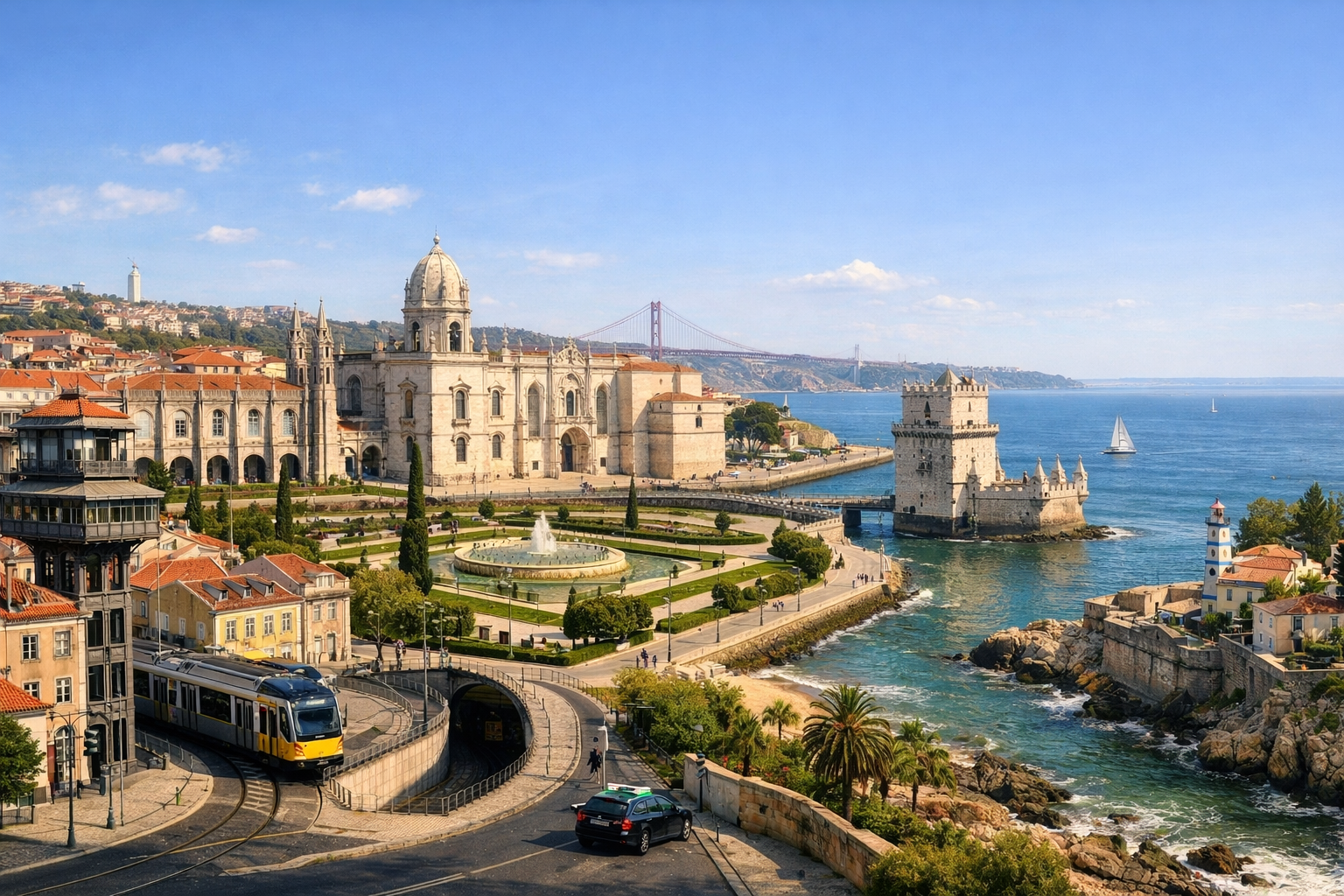
Day 1 — Lisbon: a gentle arrival and Baixa without unnecessary climbs
🚕 After landing, it’s best to choose the gentlest option with no unnecessary transfers: an official taxi or a taxi/ride-hailing app to your hotel in the center. If you prefer public transport, the airport is easy to reach by metro via Aeroporto station, but for a comfortable start after the journey, a taxi usually wins on both energy and time. For your base, it’s best to choose Restauradores, Rossio, Avenida da Liberdade, or Marquês de Pombal: from here it’s easy to get to Baixa, Belém, and the train to Cascais, and the terrain here is noticeably friendlier than in Alfama or Graça.
🏨 After check-in, plan a long pause: tea, a shower, 1–2 hours of rest, and only then a short outing into the city. This rhythm is especially good for comfortable 60+ travel: don’t rush on the first day, don’t try to “squeeze in the maximum,” but give your body time to adapt to the flight, the cobblestones, the new light, and the more active city pace.
🚶 Baixa is the best district for a first introduction to Lisbon, especially in an easier format. It is a geometrically ordered center, rebuilt after the 1755 earthquake, with wide streets, clear navigation, and relatively flat terrain. Here, a walk feels less like storming hills and more like a calm unfolding of the city through squares, azulejo facades, arches, cafés, and the soft light that in the evening reflects off the pale stone paving.
📍 The main route of the day: Restauradores or Rossio → Rua Augusta → Praça do Comércio. It’s best to walk slowly, in 15–20 minute stretches, with stops at cafés. Along the way, it’s pleasant to admire Baixa’s elegant facades, the windows of old shops, wrought-iron balconies, and the rhythm of the streets where business life, tourist bustle, and local everyday life mix in an amazingly natural way. At the end of the route, Praça do Comércio welcomes you — a huge ceremonial square by the Tagus, where Lisbon opens up through space, air, and the river.
🌊 At Praça do Comércio, there’s no need to rush onward: it’s the ideal place for a soft end to the day. Here you can sit under the arcades, walk down to the steps by the water, and watch the ferries and the wide surface of the Tagus. In Lisbon, the river is not just a backdrop but part of the city’s character: it brings light, wind, and a sense of maritime history, without which Belém, Jerónimos Monastery, and the age of great voyages would feel completely different.
☕ Day comfort: around 4–5 km of walking in total, with the option to reduce it to 2.5–3 km by taxi between points; there are almost no steep climbs, and stairs are not required; toilets are available in the hotel, cafés, Baixa shops, and major squares; transfers are minimal — the airport and one calm outing; medical access is good thanks to the central location and quick taxi availability.