
Buy PDF guide

Buy PDF guide — 6.90 USD

PDF — 6.90 USD

Museum and cultural tour of Hamburg

Museum and cultural tour of Hamburg

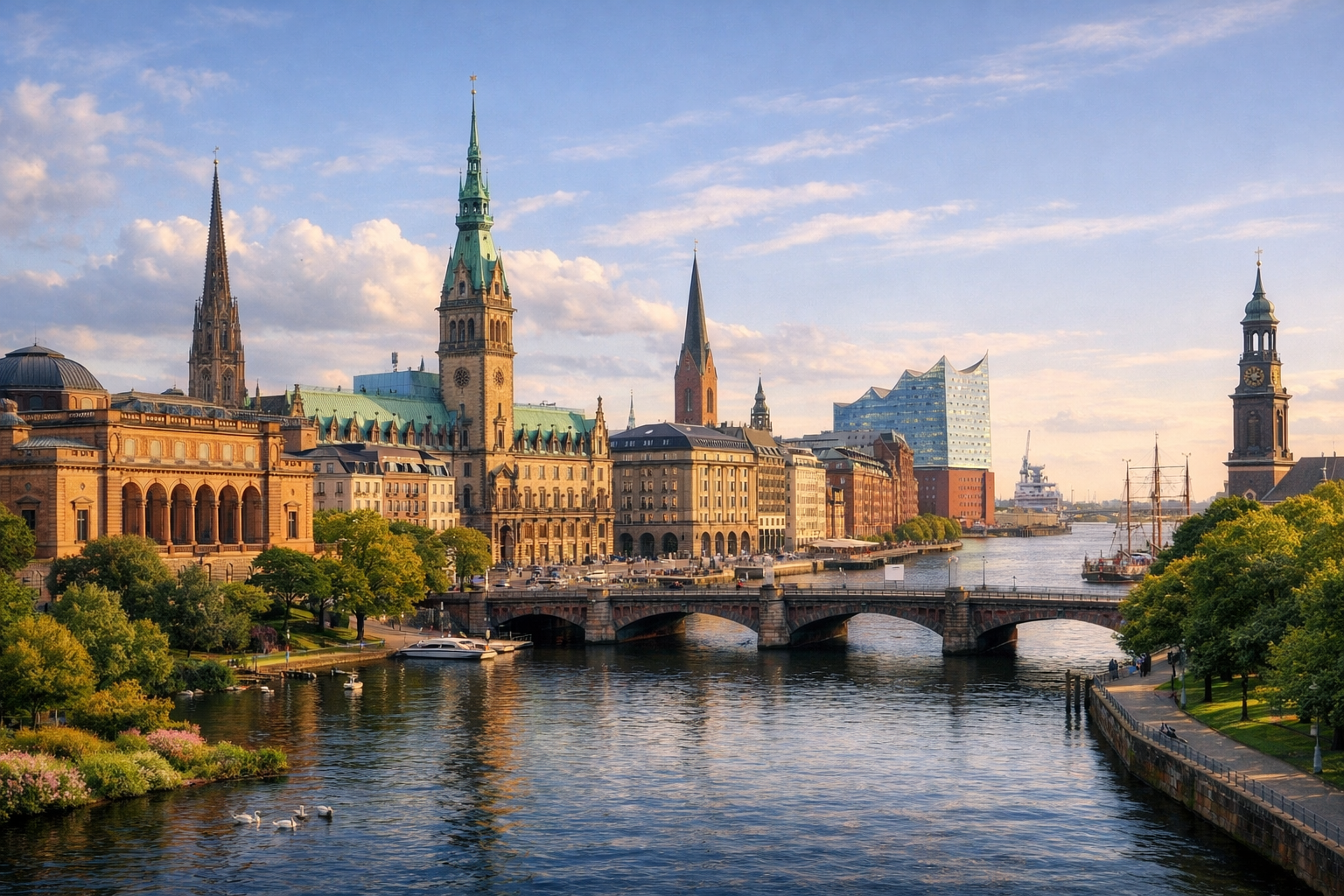
Discover Hamburg through a vibrant journey from the historic Altstadt and the renowned museums of the Kunstmeile to the red-brick warehouses of Speicherstadt. Continue into sleek HafenCity and end in the lively streets of St. Pauli, where the city’s cultural edge comes alive.

🧭 DAY-BY-DAY ITINERARY

Ready-made country and city routes with daily plans, sights, transport and accommodation. Buy PDF guides for independent travel.

🧭 DAY-BY-DAY ITINERARY


Day 1 — Hamburg: historic center, Kunsthalle, and the city by the water

  • 🚶 The first day is best devoted to your “entry” into Hamburg through its center and artistic foundation. Start in the morning around Hauptbahnhof and the Kunstmeile: it’s easy to visit Hamburger Kunsthalle here, one of the city’s main museums, and not try to see everything at once — it’s better to choose 2–3 halls and go through them thoughtfully. From the museum, it’s only a few minutes to the streets around Binnenalster, so after art it feels natural to switch to the urban landscape: water, facades, shopping arcades, old merchant rows, and a sense of northern elegance. Then head toward Rathausmarkt and Alsterarkaden — this part of Hamburg looks almost theatrical: white arcades, canals, reflections in the water, a businesslike rhythm, and at the same time remarkable photogenic charm. After lunch, continue your walk toward Deichstraße — one of the city’s most atmospheric historic streets, where Hamburg’s old Hanseatic character is especially tangible. Allow 10–20 minutes on foot for transitions between stops during the day; give the museum segment at least 2–3 hours, and about 1–1.5 hours for a relaxed lunch and coffee. The evening is beautifully concluded by Binnenalster or on a short walk to Jungfernstieg: soft light, water, and the neat urban skyline create a very complete first impression of Hamburg.


Day 2 — Hamburg: Speicherstadt, Miniatur Wunderland, and the Maritime Museum

  • 🚶 On the second day, it makes sense to move on to Hamburg’s most recognizable image — the brick world of warehouses, canals, and port memory. Start with a walk through Speicherstadt: it is especially pleasant in the morning, because the area is not yet crowded, and the red brick, bridges, and water create an almost cinematic depth. The day’s main museum stop is Miniatur Wunderland: it’s best to come at a pre-booked time slot, because the place is very popular. Even if you are usually indifferent to models, the space impresses with its scale, attention to detail, and the way it turns technology into a real spectacle. After your visit, take a break for coffee or a light lunch right in the area, then continue to HafenCity and the Internationales Maritimes Museum Hamburg. From Miniatur Wunderland to the Maritime Museum it is about a 15–20 minute walk at an easy pace; this is a convenient stretch without any rush. The Maritime Museum reveals Hamburg not only as a beautiful port city, but also as a place whose identity is deeply connected with the sea, trade, maps, ship models, and the history of long-distance routes. If you still have energy left, head up toward Elbphilharmonie Plaza in the evening: from the museum to the philharmonic hall it is about a 20–25 minute walk through modern HafenCity. This is an excellent end to the day: after brick-built history and museum texture, you find yourself in a space of glass, light, and broad panoramas over the Elbe.

Day 3 — Hamburg: HafenCity, Elbphilharmonie, St. Pauli, and a green pause

  • 🚶 The third day is worth making lighter and more “mixed”: a bit of modern architecture, a bit of urban culture, and a bit of rest. Start with HafenCity and Elbphilharmonie if you didn’t manage to see it properly the day before: in the morning the district looks especially clean and graphic, and the harbor views help you feel the scale of the city. Then you can walk to Landungsbrücken or take public transport for one short stop if you want to save energy. From Elbphilharmonie to Landungsbrücken, walking usually takes about 25–30 minutes along the water, and by bus or ferry it is faster, but the walking option is especially pleasant here. During the day, shift toward St. Pauli and Reeperbahn, but not only for the district’s “entertainment reputation”: it is more interesting to perceive it as an important cultural layer of Hamburg, where port history, music, theaters, and urban energy mix very naturally. After that, take a gentle break in Planten un Blomen — a large central park that is easy to reach by U-/S-Bahn or bus in 15–20 minutes depending on your starting point. This park belongs in the route not as a formal box to tick, but as the right rhythmic balance: after the water, brick, museums, and active Hamburg streets, here you get quiet, greenery, and space for a final walk. Leave the evening either for a calm dinner in the center or for returning to your favorite spot by the water — Hamburg is best wrapped up not in haste, but with a view of canals, the port, or the Elbe.

Flight tickets

eSIM for travel

Buy PDF guide

Buy PDF guide — 6.90 USD

PDF — 6.90 USD