
Buy PDF guide

Buy PDF guide — 6.43 USD

PDF — 6.43 USD

Ljubljana

Ljubljana

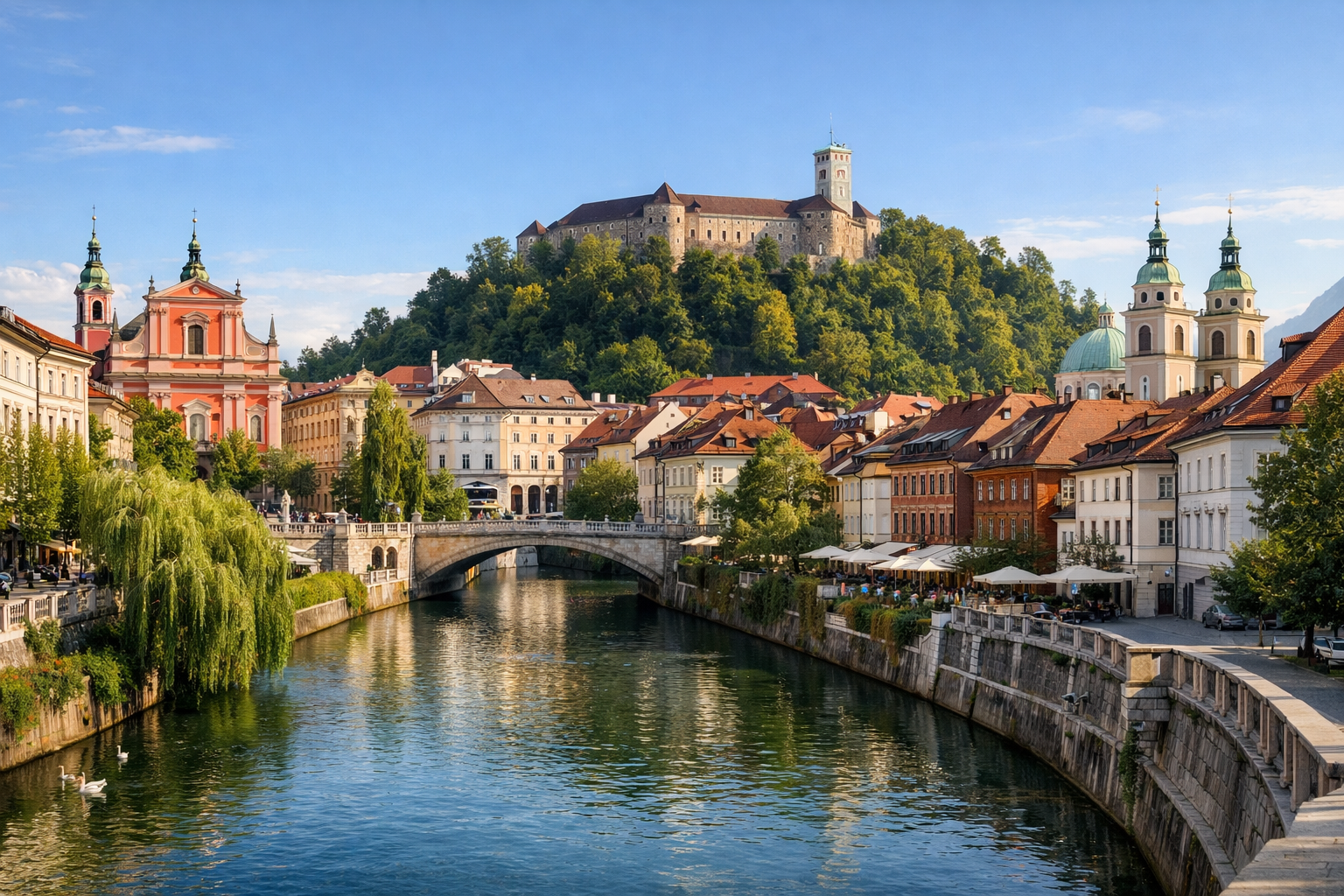
Ljubljana charms with its riverside Old Town, where Baroque facades and lively cafés lead the eye up to Castle Hill. From the leafy calm of Tivoli Park to the creative energy of the Metelkova Museum Quarter, the city feels effortlessly elegant and full of character.

🧭 DAY-BY-DAY ROUTE

Ready-made country and city routes with daily plans, sights, transport and accommodation. Buy PDF guides for independent travel.

🧭 DAY-BY-DAY ROUTE


Day 1 — Ljubljana: Old Town, river, and castle

  • 🚶 It’s best to devote the first day to the heart of Ljubljana — a compact, very lively historic center that is easy to explore on foot without rushing. Start at Prešeren Square and the Triple Bridge, where you immediately feel the character of the city: baroque softness, Plečnik’s work, street musicians, cafés, and the river, which does not so much divide the center as connect it. Then walk along the Ljubljanica embankment to Market Square and Dragon Bridge: the route is short but rich in details — facades, arcades, views of towers, and a calm urban rhythm. For this walk, with stops for photos and coffee, it makes sense to allow about 2.5–3 hours. After lunch, head up to Ljubljana Castle: on foot via the path from the old town, it usually takes about 15–20 minutes uphill, and if you want to save energy, you can take the funicular. The castle itself is not just a viewpoint, but a place where the city’s history is easy to read: courtyard, walls, tower, museum spaces, and wide views over red roofs, domes, and the green hills around. It’s best to set aside 2–3 hours for the castle and viewing platforms, then toward evening go back down to the center and finish the day with dinner by the water, when Ljubljana becomes especially cozy and intimate.


Day 2 — Ljubljana: Tivoli, National Gallery, and museum center

  • 🚶 Build the second day as something more “airy” and cultural. In the morning, head to Tivoli Park — the main green area of the center, reachable from the old town on foot in about 15–20 minutes. It is not just a park for a quick pass-through, but a major urban pause: avenues, lawns, slopes, a rose garden, walking paths, and the feeling that the capital unexpectedly reveals itself as a very green and peaceful city. A walk through Tivoli with unhurried stops easily takes 1.5–2 hours. Then it makes sense to continue to the National Gallery of Slovenia and, if you wish, to the Museum of Modern Art: the two are linked by a very convenient short walk of just a few minutes. It’s better not to overload this day with too many museums — choose 1–2 places and explore them thoughtfully. The National Gallery offers a beautiful historical “axis” of Slovenian art, while the modern art nearby adds another, more experimental and intellectual layer of the city. After the museums, you can pause for a late lunch and then gently return to the center via Congress Square and the Križanke area. Altogether, the day is nicely balanced: about 5–7 hours of active plans with a comfortable alternation of walks, greenery, and interiors, without any sense of rushing.

Day 3 — Ljubljana: Metelkova, city museum, and a calm finale

  • 🚶 Dedicate the third day to a more contemporary and layered side of Ljubljana. Start with the Metelkova museum quarter: from the center, it’s easy to get here by bus in 10–15 minutes or walk in about 20–25 minutes if you want one more city stroll. During the day, the area is perceived not as a nightlife scene but as a cultural hub: here it works well to combine the Slovene Ethnographic Museum, the National Museum of Slovenia – Metelkova, and an exterior look at Metelkova itself as a space of alternative urban culture. The contrast with postcard views of the old center is especially noticeable here: less “ceremony,” more lived texture, graphics, art objects, and a sense of a real urban layer. After the museum block, head back toward the historic core and visit the City Museum of Ljubljana to gather the city’s past into a more complete story — from ancient Emona to the modern capital. It’s worth allocating the main part of the day, around 5–6 hours with a break for rest, to museums and transit. The finale is best kept calm: a short evening walk along the embankment, souvenirs in the little shops of the center, coffee or a glass of wine by the river, and one last look at the illuminated castle. Ljubljana works especially well with exactly this kind of ending — without haste, when the city remains not a set of points, but a very complete feeling.

Flight tickets

eSIM for travel

Buy PDF guide

Buy PDF guide — 6.43 USD

PDF — 6.43 USD