
Buy PDF guide

Buy PDF guide — 10.90 USD

PDF — 10.90 USD

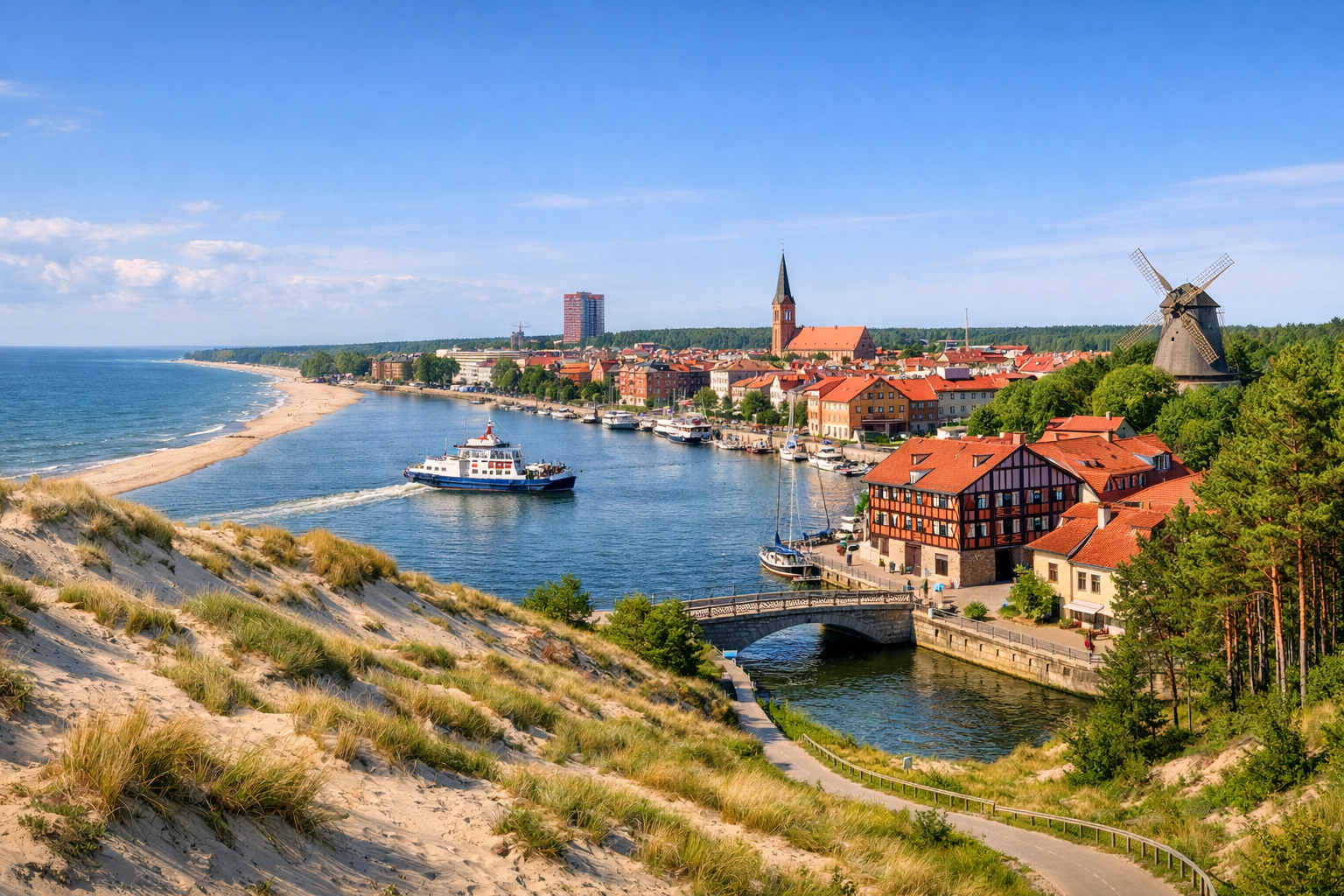
Lithuania, Klaipėda and the Curonian Spit. An inexpensive trip along the Baltic coast with sandy dunes, cycling routes, and a ferry crossing. Season: May - September.

Lithuania, Klaipėda and the Curonian Spit. An inexpensive trip along the Baltic coast with sandy dunes, cycling routes, and a ferry crossing. Season: May - September.

Discover Lithuania’s Baltic coast on an affordable escape from Klaipėda across to the Curonian Spit. Ferry to Smiltynė, cycle past sandy dunes and pine forests through Juodkrantė to Nida, and enjoy long, breezy days by the sea from May to September.

🧭 DAY-BY-DAY ITINERARY

Ready-made country and city routes with daily plans, sights, transport and accommodation. Buy PDF guides for independent travel.

🧭 DAY-BY-DAY ITINERARY


Day 1 — Klaipėda: old town, waterfronts, and a port-city atmosphere

  • 🚶 Klaipėda is Lithuania’s most maritime city: compact, windy, with a distinctive Northern European character and a pleasant sense of freedom by the water. Begin your route in the Old Town, where half-timbered facades, cobbled streets, courtyards with cafés, and traces of the Prussian past create an atmosphere that feels less “capital city” and more intimate and lively. It is especially pleasant to walk here without rushing: from Theatre Square with the figure of Annchen von Tharau to the Dane River, then along the water toward the drawbridges, yachts, and former warehouse quarters. Klaipėda does not overwhelm with the number of sights — it wins you over with its mood: the smell of the sea, seagulls, old brick, wooden details, wide skies, and the feeling that the city exists where land, lagoon, and the open Baltic meet.

  • 🏛️ If you want a gentle introduction to the region’s history, add the History Museum of Lithuania Minor or the Castle Museum of Klaipėda. They help explain why this area feels so different from the rest of Lithuania: Lithuanian, German, Curonian, and Memel traditions all intertwine here, and Klaipėda itself was for centuries an important port and border city. In the evening, it is worth heading out to the embankments along the Dangė and having dinner in the center without planning anything too intense: after the journey, it is better to save your energy for the Curonian Spit, because the real magic of the trip begins the next day.


Day 2 — Smiltynė and the northern Curonian Spit: ferry, sea, and the Lithuanian Sea Museum

  • 🚆 In the morning, transfer to the Old Ferry Terminal in Klaipėda. The passenger ferry to Smiltynė takes only a few minutes, but this short crossing gives a beautiful sense of a real transition: the busy mainland city stays behind, while ahead lie pines, sand, dunes, and a completely different rhythm. In high season, this is one of the most pleasant and budget-friendly ways to reach the Curonian Spit, especially if you are not taking a car. From the terminal, it is convenient either to walk or to take a local bus/bicycle toward the Sea Museum area.

  • 🐬 The Lithuanian Sea Museum in Smiltynė is one of the brightest highlights of the entire route and a very good choice for a day when you want to combine nature with a meaningful visit. The complex is located in the area of the old sea fortress at Kopgalis, and around it are pine forest, sandy paths, and the nearby sea. What is interesting here is not only the aquariums and dolphinarium, but also the location itself: the museum is integrated into the space of former defensive fortifications, so the walk feels like a combination of a museum, a seaside park, and a historical outpost at the edge of the spit.

  • 🚶 After the museum, take a calm walk to Smiltynė Beach. This stretch of coast is especially good for a first introduction to the Baltic: bright sand, a long shoreline, the smell of pine, and the constant wind create exactly that northern maritime cinematic mood that draws people to the Lithuanian coast. If you still have energy, you can do a short bicycle ride along the northern section of the spit, but without overloading the day: it is better to save the long cycling days for Juodkrantė and Nida. In the evening, return to Klaipėda on the same ferry; considering the travel, the museum, the beach, and the pauses, the day turns out full but comfortable.

Day 3 — Juodkrantė: cycling day, lagoon promenade, and the Hill of Witches

  • 🚆 Today it makes sense to move closer to the central part of the Curonian Spit — to Juodkrantė. From Klaipėda, first take the short crossing to Smiltynė, then continue by bus along the spit. The journey takes a noticeable amount of time, but it is already part of the trip itself: pine forests, bright sandy clearings, flashes of the lagoon, and the long narrow strip of land between water and water gradually shift the experience from an urban format to something almost meditative. Juodkrantė is one of the coziest resort villages on the spit: less hectic than Nida, and very pleasant for a relaxed, affordable stay.

  • 🚴 This day is well suited to cycling. The Curonian Spit is famous for routes without sharp elevation changes, and the section around Juodkrantė is especially friendly for travelers without athletic training. The paths run through pine forests, along the lagoon, past neat wooden villas, piers, and trails leading to the sea. It is here that you really feel the spit is not just a beach destination, but a rare scenic corridor where dunes, forest, water, and human presence are held in a delicate balance.

  • 🌲 Juodkrantė’s main atmospheric highlight is the Hill of Witches, an open-air display of wooden sculptures in the forest. This is not a museum in the classical sense, but a folklore trail where figures from Lithuanian legends, myths, and tales appear among the trees almost unexpectedly. The place feels at once slightly theatrical, a little mystical, and very photogenic: in the soft Baltic light, the carved characters look by turns fairy-tale-like and almost pagan. After the climb, it is especially pleasant to descend to the lagoon promenade and spend the evening by the water, when boats rock at the piers and the sun lowers over the calm surface of the Curonian Lagoon.

Day 4 — Nida: the Parnidis dune, lighthouse, Thomas Mann, and grand Baltic landscapes

  • 🚆 The journey from Juodkrantė to Nida along the spit takes about 35–45 minutes by bus, depending on the service and stops. It is best not to leave too late, so that your day in Nida does not turn into a race between sights. Nida is the most famous and perhaps the most picturesque part of the Lithuanian Curonian Spit: here you feel especially strongly the combination of resort lightness, a protected natural landscape, and an old cultured summer-house tradition. The village feels airy: low houses, boats, sandy tones, quiet streets, and constantly changing light.

  • 🏖️ The main focus of the day is the Parnidis dune. This is one of the most impressive viewpoints on the entire route: from here open rare panoramas of the Curonian Lagoon, sandy slopes, forest belts, and the sea side of the spit. The landscape feels almost unreal — as if a desert had unexpectedly met a northern coast. It is best to come here in comfortable shoes, with water, and with extra time, because this place deserves more than just a quick checkmark. In windy or clear weather, the view is especially striking: sand, sky, and water come together into a very pure, almost graphic composition.

  • 🏛️ In the second half of the day, switch from nature to culture. The Thomas Mann Memorial Museum in Nida helps you see how this region was perceived not only by travelers, but also by European intellectuals. The writer was drawn precisely by the local landscape — dunes, silence, the blue of the lagoon, and a special sense of being cut off from the mainland. Closely related in spirit are the Curonian Spit History Museum and the ethnographic fisherman’s homestead: together they reveal Nida not only as a resort, but as a settlement with its own memory, craft traditions, and way of life. If there is still time, climb up to the Nida lighthouse or simply walk along the lagoon promenade at sunset.

Day 5 — Nida and return to Klaipėda: a morning bike route, the sea, and a calm finale

  • 🚴 On the last day, it is best not to overload yourself with long transfers within the spit. In the morning, take a short bicycle route or a walk among pine trails, the lagoon, and the path out to the sea. This is a good time to experience the Curonian Spit not as a list of attractions, but as a space: to hear the wind in the pines, walk along boardwalks through the sand, and once again see how the color of the water changes and how quiet the Baltic can be away from major resorts. For a budget trip, this is especially valuable: the best impressions here often do not require a ticket at all.

  • 🌊 If the weather allows, spend a couple of hours at Nida Beach. The coast here is broad, light, and surprisingly spacious. Even in summer, you can still find a sense of solitude, especially if you walk a little farther from the most obvious access points. The sea in this region is not southern and not “postcard-warm,” but it feels very honest: fresh, clear in mood, and ideal for walks, long conversations, and the final frames of the journey.

  • 🚆 In the second half of the day, return by bus from Nida to Smiltynė/Klaipėda, taking into account the ferry transfer. The whole trip usually requires extra time: first the bus along the spit, then the ferry crossing, and then a short urban ride or walk into central Klaipėda. Plan your departure without stress, especially in the May–September season, when there are more passengers on the spit. This kind of ending is logical and realistic: you complete the route without exhausting rushes, preserving the main impression — this was a compact, affordable, and very scenic trip along one of the most beautiful stretches of the Baltic coast.

Flight tickets

eSIM for travel

Buy PDF guide

Buy PDF guide — 10.90 USD

PDF — 10.90 USD