
Buy PDF guide

Buy PDF guide — 8.90 USD

PDF — 8.90 USD

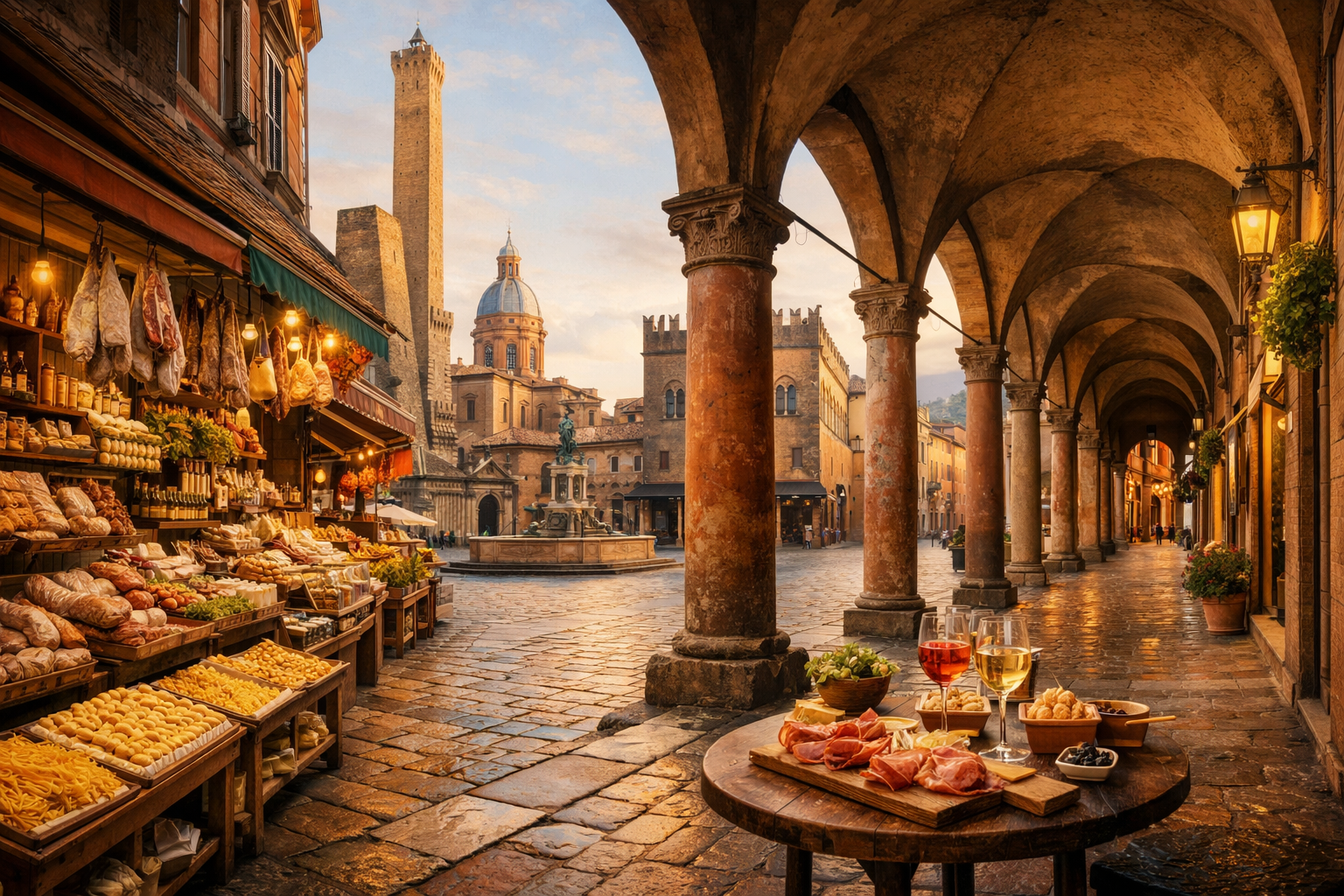
Italy, Bologna. Bologna through taste — markets, fresh pasta, traditional products of Emilia-Romagna, small gourmet shops, aperitivo, and leisurely walks under the porticoes.

Italy, Bologna. Bologna through taste — markets, fresh pasta, traditional products of Emilia-Romagna, small gourmet shops, aperitivo, and leisurely walks under the porticoes.

Discover Bologna through its flavors, from bustling markets and fresh pasta to the traditional specialties of Emilia-Romagna in its small gourmet shops. End the day with an aperitivo, then wander beneath the city’s endless porticoes at an easy, delicious pace.

🧭 DAY-BY-DAY ITINERARY

Ready-made country and city routes with daily plans, sights, transport and accommodation. Buy PDF guides for independent travel.

🧭 DAY-BY-DAY ITINERARY


Day 1 — Bologna: getting acquainted with the city’s flavors, Quadrilatero, and aperitivo

  • 🚆 If you arrive at Bologna Guglielmo Marconi Airport (BLQ), the most convenient start is the Marconi Express to Bologna Centrale: the journey takes about 7–8 minutes, then it is easy to take a taxi to the Piazza Maggiore and Quadrilatero area in 10–15 minutes or walk from the station in about 20–25 minutes under the porticoes. After check-in, it’s best not to overload the day and to begin with a gentle introduction to the city.

  • 🚶 The first day is best devoted to Bologna’s ancient gastronomic heart — Quadrilatero, the old market district next to Piazza Maggiore. This is not an open-air museum, but a living labyrinth of narrow streets where shop windows filled with Parmigiano Reggiano, Prosciutto di Parma, Mortadella Bologna, bottles of Lambrusco, and trays of fresh egg pasta look like part of everyday city life. It is especially beautiful to wander here without rushing: under the porticoes the light is softer, the smells of bread and salsiccia mix with coffee, and around every corner you find tiny gourmet shops, historic salumerie, and pasta makers.

  • 🍝 For your first gastronomic immersion, it makes sense to focus not on a long lunch but on a tasting walk. Look for fresh pasta at small specialized spots like Sfoglia Rina, Pasta Fresca Simoni, or the district’s historic shops; this is a great moment to try tortellini, tortelloni, tagliatelle al ragù, and balanzoni. It is important to remember that fresh pasta in Bologna is especially active in the first half of the day, so it’s best to come before midday, while the selection is at its best.

  • 🧀 A special pleasure is stopping by Tamburini, one of the center’s most famous historic food shops, to gather the “taste of the region” in one place: aged Parmigiano Reggiano, culatello and other salumi, mortadella Bologna IGP, local wines, and delicacies for a picnic or gifts. It’s an excellent stop for both couples and groups of friends: you can browse the displays at leisure, buy small portions to taste, and learn to distinguish Emilia-Romagna products not by tourist labels, but by textures, aging, and aroma.

  • 🥂 Toward evening, move on to aperitivo in the Quadrilatero area or around Mercato di Mezzo. The pleasure here is not so much in “having a full dinner” as in slipping into the city’s rhythm: a glass of Pignoletto or Lambrusco, small snacks, olives, cheeses, crostini, slices of mortadella, and that unhurried conversation under the porticoes that makes Bologna especially wonderful in spring and autumn. If you want a full dinner on the first day, choose a bookable traditional osteria and check the menu in advance.

  • 🥗 For travelers with dietary restrictions, the day is also quite comfortable: almost everywhere you can put together a plate of cheeses, vegetables, bread, salads, and separate dishes without pork; in pasta bars and trattorias it’s worth asking in advance about vegetarian options, the possibility of replacing ragù with burro e salvia, pomodoro, or a vegetable sauce, and in case of gluten intolerance — checking whether gluten-free pasta is available and whether there is a risk of cross-contact in the kitchen.


Day 2 — Bologna: Mercato delle Erbe, a cooking class, and a slow walk under the porticoes

  • 🛍️ It’s best to start the morning of the second day at Mercato delle Erbe, the largest historic covered market in the center at Via Ugo Bassi, 25. This is the ideal place to see Bologna not as a backdrop, but as a city where people really do buy greens, fish, meat, seasonal vegetables, cheeses, and fresh pasta for lunch. The atmosphere here is a little less ceremonial than in Quadrilatero, but more “homey”: vendors work to the rhythm of local life, and the selection is especially good for those who want to understand what everyday Emilia-Romagna cooking is made of.

  • 👩‍🍳 After your walk through the market, plan the main highlight of the day — a real cooking class in central Bologna with a market visit followed by the preparation of several traditional dishes. This format works especially well for a food-focused trip: you don’t just taste pasta fresca, you see the products before cooking, learn the differences between tortellini and tortelloni, understand how egg dough works, why flour and humidity matter, and how homemade Emilian cuisine comes to life in practice. These classes usually require advance booking, so reserve ahead of time, especially for spring and autumn dates.

  • 🍷 A good plan for the day is to combine the class with a late lunch so that you don’t have to look for a second substantial meal right afterward. After the lesson, you usually won’t want to rush: it’s better to leave the second half of the day for a calm walk through the streets around Via Ugo Bassi, Via Rizzoli, Pavaglione, and Piazza Maggiore. Bologna is a city that opens up especially well in the pauses between meals: the long porticoes create soft shade, transitions between quarters are short, and distances in the center are very comfortable for an easy route without overload.

  • ☕ In the second half of the day, you can take a gastronomic break with coffee and dessert, and by evening choose an informal dinner in the Mercato delle Erbe area. A place with seasonal cuisine and a focus on fresh market products works well here, for example a trattoria-style spot where bread and pasta are handmade and the menu changes with the seasons. For couples, this is one of the coziest evenings of the whole trip: after the noisy market, it is wonderful to sit in an intimate space and try a more composed, local cuisine without the feeling of a tourist conveyor belt.

  • 🥬 If there are vegetarians in your group, the second day is especially convenient: at the market it’s easy to build a regional product map without a meat focus — Parmigiano Reggiano, squacquerone, seasonal vegetables, artichokes, mushrooms, legumes, bread, fruit, local preserves. For lactose-free or gluten-free diets, it is important to inform the cooking class organizers in advance: not all traditional recipes are easy to adapt at the last minute, but with an early request you can often get an alternative menu.

Day 3 — Bologna: fresh pasta, classic trattorias, and an evening in the university district

  • 🍴 The third day is worth dedicating to Bologna’s more “edible” classics — not the markets as such, but the places where the city shows its culinary heritage through prepared dishes. Start the morning slowly: a late breakfast, coffee, and then a walk toward pasta shops and the old streets of the center. If on the first day you were just getting acquainted with the displays, now you can consciously hunt for specific specialties: tortellini in brodo, tagliatelle al ragù, lasagne verdi, gramigna con salsiccia, cotoletta alla bolognese.

  • 🥟 A great idea is to make this day a “pasta route” through several spots without overeating. For example, you could buy a small portion or have an early lunch at Pasta Fresca Naldi, known for its handmade fresh pasta, and then continue your walk under the porticoes toward the livelier center. A day like this works precisely because of the split format: not one heavy three-hour lunch, but several thoughtful stops, each revealing a different side of Bolognese cuisine.

  • 🏛️ Between gastronomic stops, it is useful to leave time for the city’s fabric itself: a short stop at the Archiginnasio, a walk along the Pavaglione porticoes, and a move toward the medieval streets and towers. In Bologna, food and architecture are almost inseparable: you step out of a salumeria and immediately find yourself in the cool stone shade of the arcades, where the sounds of the city become softer. That is why a food trip here feels not like a list of restaurants, but like a slow experience of the place.

  • 🍝 For the main lunch or an early dinner on this day, it makes sense to choose one of the reliable traditional trattorias — for example Osteria dell'Orsa for a more casual and lively atmosphere, or a classic trattoria with a strong focus on home-style cooking. At popular spots, lines and waiting times are very real, and at better-known restaurants booking is essential. If you want a more romantic setting for a couple, it’s better to reserve a table in advance and choose an early dinner time.

  • 🍷 In the evening, head to the area between the university streets and the center, where you can end the day with a glass of local wine and a more relaxed atmosphere. This is a good moment to try lambrusco secco or pignoletto, as well as local cheeses and small snacks instead of a second heavy dish. For friends, the day is especially good in this format — lots of short gastronomic stops, little rigid timing, and maximum urban atmosphere.

  • 🚶 The day’s logistics are very easy: all the main points within the historic center are within walking distance, and transitions usually take from 5 to 20 minutes. Thanks to this, the tour remains comfortable even after substantial lunches. If you need a rest, it’s worth planning a return to the hotel for 1–1.5 hours in the afternoon, then heading out again for an evening aperitivo or dinner.

Day 4 — Bologna: a deeper look at Emilia-Romagna products, final shopping, and a farewell lunch

  • 🧺 It’s best to make the last day not the busiest, but the most “deliciously curated.” In the morning, return to your favorite gastronomic quarter — either Quadrilatero or Mercato delle Erbe — already knowing what you liked most. This is the ideal time for final purchases: Parmigiano Reggiano of different ages, vacuum-packed mortadella Bologna IGP, local wines, artisanal dried pasta, balsamic products from the region, cookies, and small gourmet gifts.

  • 🛒 If you want not only to buy but also to understand, arrange a little “tasting by category” for yourself: compare the aging of parmigiano, look at different kinds of tortellini and fillings, and ask the sellers what is better to take in hand luggage and what should go in checked baggage. Bologna rewards the attentive traveler: many impressions here come not from ticking boxes, but from five minutes of conversation in a shop where someone explains why one cheese is better with a drop of honey and another with lambrusco.

  • 🥘 For a farewell lunch, it’s good to leave either a restaurant of a more “celebratory” level or, conversely, a trusted trattoria if you want to end the trip with honest regional classics. The main thing is not to try to fit in too many dishes at once. An ideal finale: antipasto of local salumi and formaggi, then one first course of your choice — tagliatelle al ragù or tortelloni — followed by dessert or coffee. If you are traveling as a couple, you can share dishes to try more and not overload the day before departure.

  • 🌿 For vegetarians, a beautiful finale works best with tortelloni burro e salvia, seasonal vegetable contorni, regional cheeses, and salads; for those who do not eat pork, it is important to ask for recommendations right away, because many Bolognese specialties are rooted precisely in pork-based traditions. For gluten-free travellers, be sure to ask about separate utensils and cooking processes — the city can offer adapted options, but in traditional pasta kitchens the issue of cross-contact really matters.

  • 🚕 Before heading to the airport, allow extra time: from the center to Bologna Centrale by taxi is usually 10–15 minutes, then the Marconi Express to the airport takes about 7–8 minutes; a direct taxi from the center to BLQ also remains a convenient option, especially if you have luggage with gourmet purchases. This brings to a close a very cohesive and realistic 4-day gastronomic tour, in which Bologna reveals itself through markets, handmade pasta, regional products, small shops, and that special culture of unhurried pleasure that the porticoes themselves help sustain.

Flight tickets

eSIM for travel

Buy PDF guide

Buy PDF guide — 8.90 USD

PDF — 8.90 USD