
Buy PDF guide

Buy PDF guide — 8.90 USD

PDF — 8.90 USD

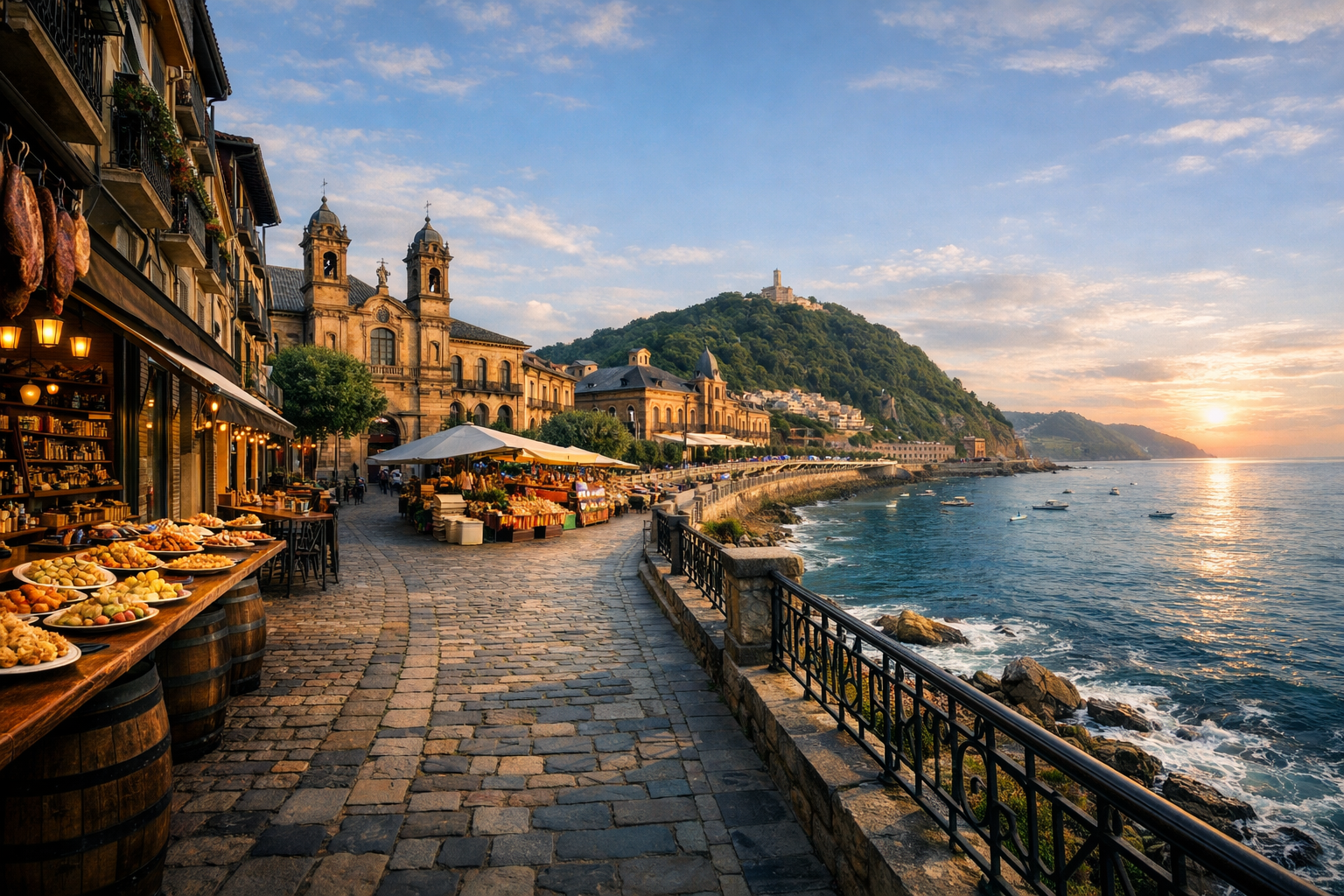
Spain, San Sebastián. San Sebastián through pintxos — the old town, gastronomic bars, markets, Basque products, walks along the ocean, and a free evening for an independent gastronomic route.

Spain, San Sebastián. San Sebastián through pintxos — the old town, gastronomic bars, markets, Basque products, walks along the ocean, and a free evening for an independent gastronomic route.

Discover San Sebastián through its pintxos, from the buzzing bars of the old town to market stalls filled with Basque cheeses, cider, and txakoli. Between oceanfront walks and a free evening to follow your own gastronomic route, this four-day escape serves up the very best of the Basque coast.

🧭 DAY-BY-DAY ROUTE

Ready-made country and city routes with daily plans, sights, transport and accommodation. Buy PDF guides for independent travel.

🧭 DAY-BY-DAY ROUTE


Day 1 — San Sebastián: old town, Mercado La Bretxa, and the first big pintxos route

  • 🚶 Start your introduction to San Sebastián with its gastronomic heart — Parte Vieja, the old town, where food is not just an everyday habit but almost a city ritual. In the morning, it’s convenient to head to Mercado La Bretxa, which operates Monday to Saturday roughly from 08:00 to 20:00. This is one of the best first addresses for understanding Basque cuisine: here you can clearly see what local gastronomy is built on — Atlantic fish and seafood, seasonal vegetables, local cheeses, sausages, preserves, sweets, and products with strong regional identity such as Idiazabal, guindilla de Ibarra, and txakoli. Don’t rush: this market is especially good as a place for a slow entry into regional flavors. Even if you are not planning full shopping, a walk between the stalls sets the tone perfectly for the following days and helps you read menus in bars and restaurants more confidently later.

  • 🍽️ After the market, walk a few minutes deeper into the old town and have lunch at one of the reliable addresses where it’s easy to begin discovering the local bar culture. For a first stop, Gandarias, Antonio Boulevard, or Atari Gastroteka work well — all are within a logical walking route in the center. It is important to remember that in San Sebastián a pintxos route is almost never built around just one place: it is better to visit 3–5 bars, have 1–2 items and a drink at each, rather than try to eat everything at one table. That is exactly how you feel the city. In the first half of the day, choose lighter and more straightforward things: anchovies, bacalao, seasonal vegetable pintxos, mushroom options, tortilla de patata, or small hot fish snacks.

  • 🌊 In the afternoon, take a break from food and walk along La Concha Bay. This part of the route matters not only for the views but also for the rhythm: a gastronomic trip in San Sebastián opens up better when there is a walk between meals. From the old town to the promenade is only a few minutes on foot, the route is practically effortless, and the views of the ocean, Santa Clara Island, and the white arc of the beach create that very Donostia contrast — from narrow bar-lined streets, you step out onto a wide seaside panorama. For couples, this is one of the most beautiful stretches of the trip, and for friends, it is the perfect moment to catch your breath before the evening program.

  • 🍷 In the evening, leave yourself a free gastronomic route without rigid timing — this is an essential part of exactly this kind of trip. It is better to mark out 4–6 addresses in Parte Vieja in advance and move by mood. A good evening logic is: start with cold pintxos and seafood flavors, then move on to hot dishes, and finish with dessert. Reliable references include: Gandarias — for classics and quality produce; Antonio — for a more modern bar presentation; Casa Urola — for those who want a more substantial seated meal and a more serious menu experience; Atari — for lively atmosphere and a beautiful location next to the basilica. If you want dinner in a restaurant rather than simple bar-hopping, it is better to book a table in advance, especially from Thursday to Saturday and in the high season from April to October.

  • 🥗 Dietary restrictions can realistically be handled on this day: in most good places, it is easiest to choose fish, vegetables, eggs, and meat-free dishes; in a seated format, it is easier to clarify gluten-free and dairy-free options in advance. Those who do not eat seafood should focus on tortilla, mushrooms, fried peppers, goat cheese, or vegetable pintxos. For celiac travelers, it is safer to choose places with clear menu-based service rather than only taking random snacks from the shared counter.


Day 2 — San Sebastián: cooking masterclass, Basque Culinary Center, and dinner with local products

  • 👨‍🍳 Dedicate the second day not only to tasting but also to understanding Basque cuisine from the inside. San Sebastián officially promotes gastronomic masterclasses and culinary experiences: you can choose a pintxos workshop, a Basque menu class, a market visit with product analysis, or more specialized formats. For this day, it makes sense to book a cooking masterclass in advance for the first half of the day, because themes of the market, seasonality, and basic ingredients work best in the morning and around lunchtime. This kind of experience is especially successful for couples and groups of friends: you do not just taste food, you learn how to assemble pintxos, understand bacalao al pil-pil, tortilla, txuleta, local cheeses, and wines.

  • 🏛️ After the masterclass, you can logically continue the day in the Basque Culinary Center area, which is located in the Miramón zone. Even if a full academic visit is not available on your specific date, the mere presence of this institution explains a lot about the city’s status: San Sebastián is not only a place to “eat well,” but also one of Europe’s most important centers of gastronomic education and research. For the route, this is a useful intellectual stop: after it, you begin to look at local products and menus not as a tourist, but as an attentive taster.

  • 🚍 The day’s logistics remain easy. From the center to the Miramón area, the most convenient way is by Dbus buses or a short taxi ride, allowing roughly 20–30 minutes each way depending on your starting point and traffic. If you are staying in the old town or by La Concha, this is especially comfortable after a busy first evening: no transfers between cities, no early wake-ups, and enough time for coffee and rest.

  • 🍽️ For dinner, it is worth choosing a more thoughtful seated format rather than endless bar-hopping. Casa Urola is a good idea, where the bar and restaurant sections let you adapt the evening to your group’s pace: you can limit yourself to a few snacks and wine, or sit down properly and try seasonal dishes based on market produce. In Basque cuisine, what is valued is not an overloaded plate but clarity of flavor and respect for the ingredient, so look on the menu for what is tied to the season, fish of the day, vegetables, mushrooms, good meat, or cod dishes. For vegetarians, it is wise to check the menu in advance or write to the restaurant, because San Sebastián has a very strong fish-and-meat tradition, but in good places you can usually still put together a full dinner without meat.

  • 🌙 If you still have energy after dinner, end the evening with a slow walk along the promenade or a short second stop at one bar for dessert and a glass. In San Sebastián, this works perfectly: the day should not be overloaded with activities, because a gastronomic tour here is built on pleasure, not on a race. It is exactly this gentle pace that makes the route truly easy.

Day 3 — Astigarraga and the gastronomic countryside: cider house, txotx, and Basque product traditions

  • 🚆 Dedicate the third day to the side of Basque gastronomy that is especially important for understanding the region — cider culture. The best compact trip from San Sebastián for this is Astigarraga, located very close to the city. You can get there by bus or taxi in about 15–25 minutes depending on your starting point. This makes the day very realistic: you do not spend half the day on the road, but you still arrive in a different gastronomic environment — more rural, traditional, direct, and very Basque in spirit.

  • 🍏 The central point of the day is logically Sidrería Petritegi — one of the best-known and easiest-to-book addresses, where you can reserve a visit in advance and choose the gastronomic format. A cider house is not just a restaurant, but a cultural ritual: the drink itself, the atmosphere, the cries of “txotx!”, the walk to the barrels, and the way the food adapts to the cider all matter here. A classic cider-house dinner or late lunch is usually built around cod omelet, cod, txuleta, and dessert with cheese, quince jam, and walnuts. This is a very authentic day for friends and couples, especially if you want not only the city’s aesthetics but also the region’s genuine food tradition.

  • 📅 An important practical point: places like this are better booked in advance, and dietary restrictions should be communicated when making the reservation. Petritegi pays attention to guests’ special needs, including celiac disease, allergies, and other restrictions, so with proper advance communication the day can be made comfortable even for those who do not eat gluten, meat, or certain products. If someone in the group does not drink alcohol, the visit still remains interesting because of the cuisine, serving tradition, and atmosphere.

  • 🧀 If you want to make the day even deeper, you can add a pre-arranged themed trip focused on Idiazabal cheese in the second half of the day, or keep it as an alternative to the cider house. The region’s official gastronomic offerings include tours related to Idiazabal cheese and rural farms, where they explain the production of cheese from latxa sheep’s milk. For a 4-day route, it is wiser not to try to combine too much into one day, so the optimal logic is this: either a full cider house with a long lunch, or a compact gastronomic trip centered on cheese. In this JSON, the main emphasis is left on cider as the closest and most convenient experience from San Sebastián.

  • 🌆 After returning to San Sebastián in the evening, leave the rest of the day free. After a rural gastronomic program, it is better not to schedule a heavy second dinner. A short walk along the Boulevard, a glass of txakoli, or a light snack in the center is enough. This is one of those days when it is better to let the impressions settle: Basque gastronomy is best experienced when there is a pause between powerful flavors.

Day 4 — Getaria or the gastronomic coast: txakoli, ocean, art, and a beautiful finale

  • 🌿 For the final day, a txakoli-themed outing fits perfectly — the light, fresh Basque white wine that is especially expressive in the warm season from April to October. The most beautiful scenario is to head from San Sebastián toward the Gipuzkoa coast, for example to the Getaria area, where it makes sense to book a winery visit in advance. One real option is Akarregi Txiki, where visits are offered by prior arrangement, usually at least 48 hours ahead, with a walk through the vineyards, an explanation of production, and a txakoli tasting paired with local tuna and anchovies. This is one of the most elegant finales for a gastronomic trip: less urban bustle, more air, slopes, vineyards, and the taste of the sea.

  • 🚗 Logistically, the day remains manageable. From San Sebastián to Getaria, it is convenient to travel by car, taxi, or organized transfer; allow about 35–45 minutes each way. If everyone in the group plans to taste, it is safer to choose a taxi or private transfer rather than self-driving. For an easy route, this is optimal: no overload, no complicated connections, and a beautiful road along the coast.

  • 🍇 Txakoli itself is especially important here as a product of place. Its acidity, freshness, and light salty maritime note work perfectly with anchovies, tuna, seafood, and simple snacks. At the winery, this flavor is perceived very differently than simply in a city bar: you see the landscape where the wine is born, and you begin to understand better why San Sebastián’s gastronomy is so closely linked not only to chefs’ techniques, but also to geography.

  • 🏛️ On the way back or after returning to the city, it is lovely to finish the tour with a cultural stop at Chillida Leku or Museo San Telmo — depending on what you want more: nature and sculpture, or the context of Basque identity. Chillida Leku in Hernani is especially good after the winery, because it is not a museum “in passing,” but a place where art lives in the landscape. San Telmo, by contrast, logically connects food, the city, and the history of Basque society. This kind of ending gives the gastronomic trip more dimension: you take home not only flavor, but also the cultural framework of the region.

  • 🍰 It is better to leave the final dinner in San Sebastián and make it festive, but not heavy. You can return again to the old town and assemble your best “encore” from favorite pintxos, or choose one place with comfortable seating and a worthy wine list. A good strategy is to focus on the dishes you have not yet covered: a good piece of fish, seasonal vegetables, Idiazabal cheese, dessert, and a glass of txakoli or local cider. For those who do not eat meat or have restrictions, it is on the final evening that it is best to choose a restaurant with a clear menu and the possibility to calmly discuss dish ingredients with the staff.

Flight tickets

eSIM for travel

Buy PDF guide

Buy PDF guide — 8.90 USD

PDF — 8.90 USD