
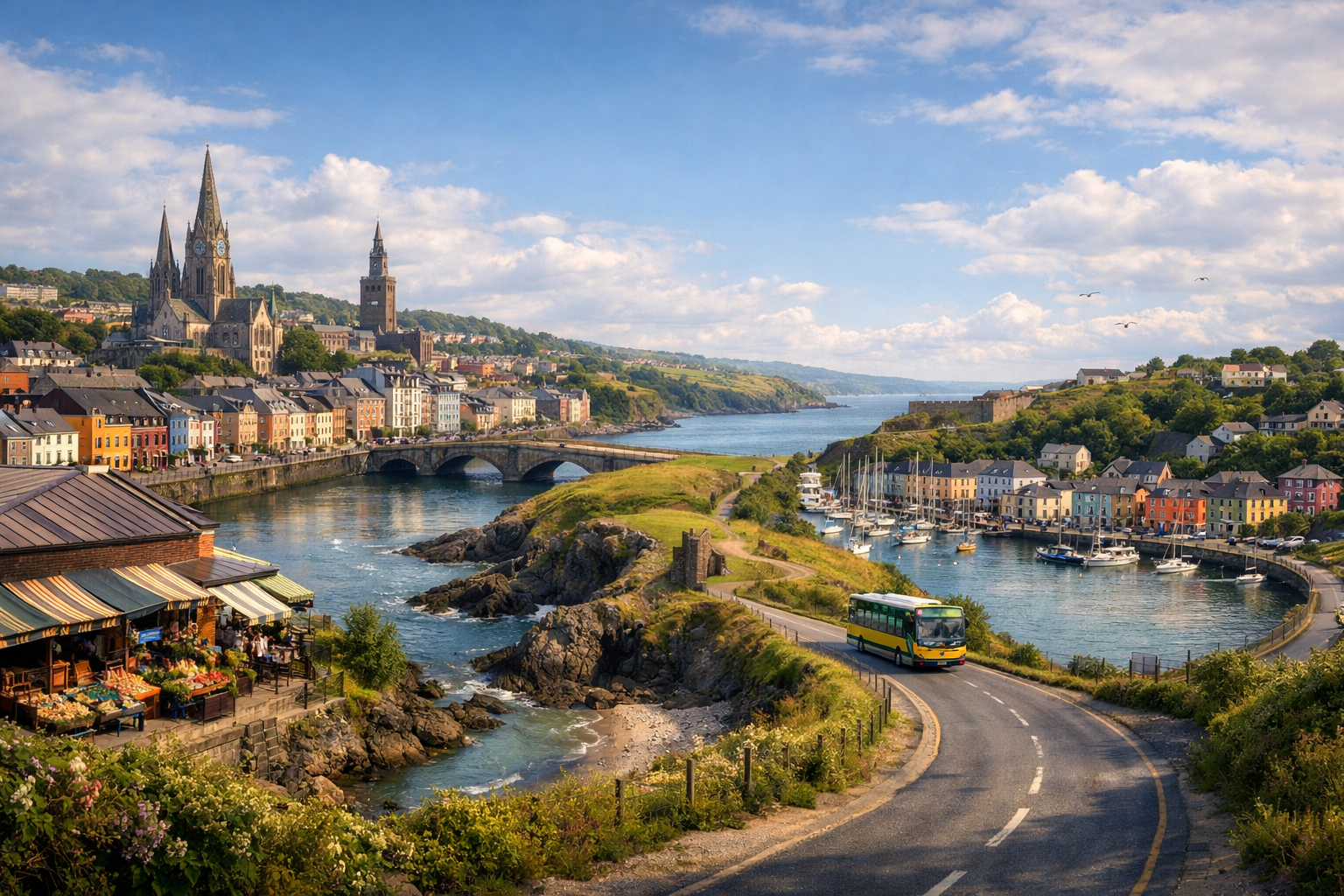
Day 1 — Cork: historic center, English Market and waterfronts
🚶 It’s best to devote the first day to a gentle introduction to Cork without extra spending on transport: it’s a compact city where many of the main sights are easy to cover on foot. Start in the center and at the famous English Market — a historic covered market in the very heart of the city, where locals come not only for groceries but also for the feeling of a living urban rhythm. It’s pleasant simply to walk between the stalls, look at cheeses, pastries, fish, smoked goods and inexpensive ready-made meals, and then head up for an affordable lunch in one of the simple nearby cafés. For a budget traveler this is one of the most useful stops: you can put together an inexpensive snack for the day, pick up pastries, fruit and something for tea without overpaying for tourist restaurants.
🚶 After the market, continue your walk through the streets of old Cork: the quarters around Grand Parade, St Patrick’s Street, South Mall and the River Lee quays show the city’s character well — a little businesslike, a little port-like, yet very human and cozy. Cork does not overwhelm with scale like Dublin; its strength is in the details: bridges, stone facades, water reflections, old signs, small pubs and the flow of locals hurrying about their day. If you want a beautiful panorama with almost no cost, you can walk up toward the area of St Fin Barre’s Cathedral and then continue to Elizabeth Fort: the fort is often considered one of the best inexpensive or free viewpoints over the center.
🍴 The smartest budget meal plan today is to eat at the market, in simple cafés near the center, or get takeaway. A rough spending guide: breakfast/pastries €4–8, a simple lunch €8–14, dinner in an inexpensive café or takeaway €10–18. If your flight arrives late or you’re out of energy, don’t try to “fit everything in”: this day should stay light, with plenty of room to rest after the journey.