
Buy PDF guide

Buy PDF guide — 4.28 USD

PDF — 4.28 USD

Gastronomic tour of Ljubljana

Gastronomic tour of Ljubljana

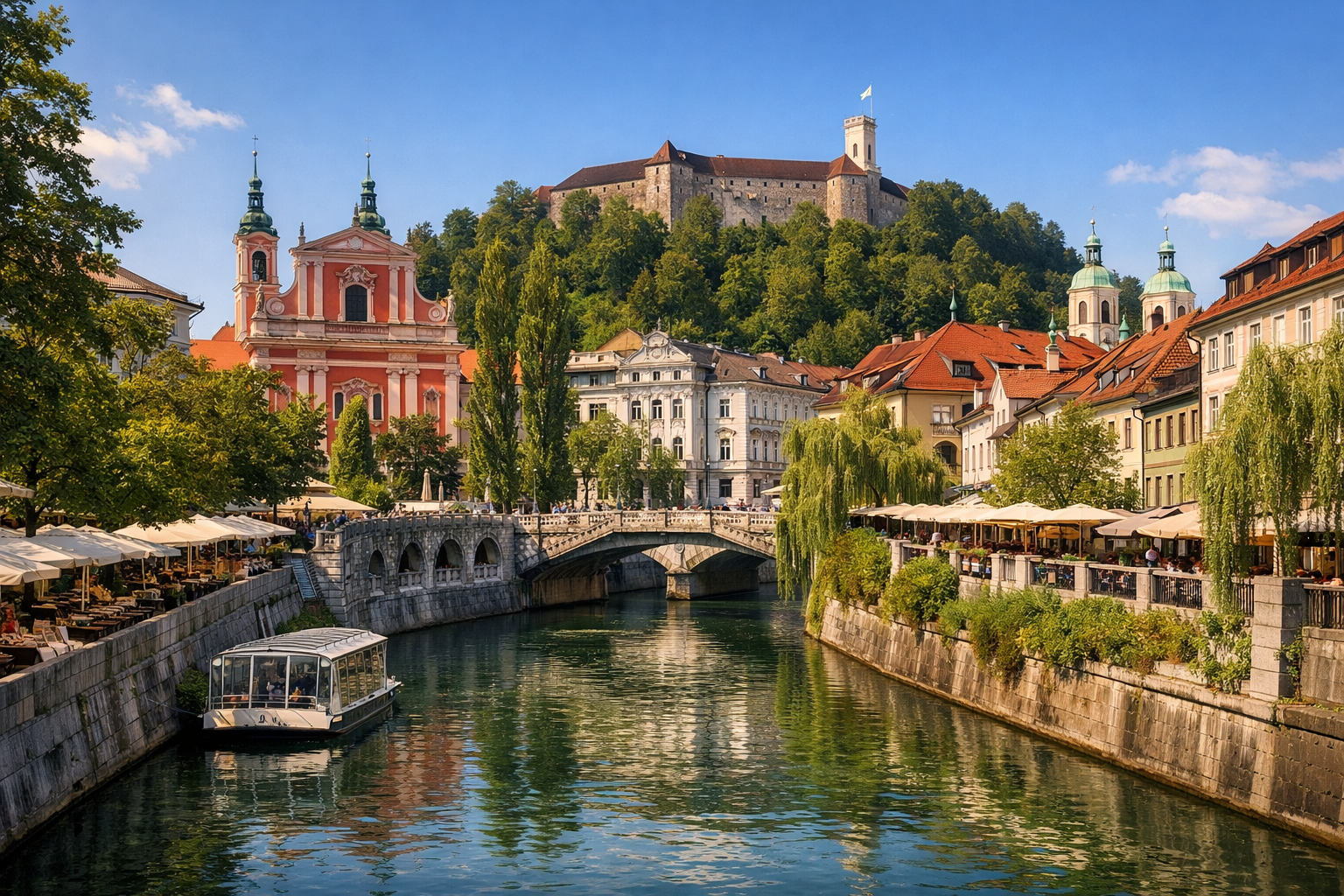
Savor Ljubljana through its leafy old streets, bustling market stalls, and hilltop castle views. From fresh local flavors in the Old Town to relaxed wine bars and a stroll through Tivoli, Slovenia’s capital is made for delicious discoveries.

🧭 DAY-BY-DAY ROUTE

Ready-made country and city routes with daily plans, sights, transport and accommodation. Buy PDF guides for independent travel.

🧭 DAY-BY-DAY ROUTE


Day 1 — Ljubljana: Central Market, Old Town and an evening on Castle Hill

  • 🚶 Start your culinary introduction to Ljubljana in the very heart of the city — at the Central Market and Pogačarjev trg square. This is not just a place to shop, but a true stage of city life, where Plečnik’s architecture, the aroma of fresh bread, cheese, honey, seasonal fruit and herbs create a vivid and very "edible" first impression of Slovenia’s capital. It is here that you especially feel the scale of the city: Ljubljana is compact, cozy, and not overwhelming, but gently draws you into the rhythm of a leisurely walk. If your trip falls on a sunny Friday from March to November, it is especially worth planning the market visit around Odprta kuhna — the famous “Open Kitchen,” when dozens of food projects gather on the square and you can literally sample modern Slovenian cuisine, dishes from different regions of the country, street food, desserts, and local wines all in one place within just a couple of hours. This is the ideal start for a food tour: instead of one long lunch, you get a full tasting day in which each dish feels like a separate little stop on the route.

  • 🚶 From the market, continue on foot through the old center: to Dragon Bridge, along the Ljubljanica River, across the Triple Bridge, and toward the embankments lined with cafés and wine bars. The whole route takes about 15–25 minutes of pure walking without stops, but in reality it is better to stretch it out for at least 2–3 hours, because this is a place that makes you want to slow down. Dragon Bridge is one of the city’s most photogenic symbols, a striking Art Nouveau monument with legendary dragons, and then the scenery softens: café terraces, historic facades, bridges, street musicians, the smell of coffee and pastries. For a late breakfast or early lunch, it makes sense to choose a place around the market and the riverside to try Slovenian appetizers, homemade pasta, seasonal soups, or a plate of local cheeses and cured meats. The most pleasant thing about Ljubljana is the distances: between the main points in the center it is usually only 5–12 minutes on foot, so the day does not turn into endless transfers and there is plenty of time and energy left for flavor, atmosphere, and rest.

  • 🚆 The most convenient way to go up to Ljubljana Castle is by funicular from the lower station at Krekov trg; the ride itself is short and takes only a few minutes, and from the Central Market to the lower station it is just about a 3–5 minute walk. This ascent is especially pleasant closer to evening, when the daytime heat fades and the city begins to glow in soft golden light. The castle is not only about panoramic views of rooftops and hills, but also an important part of the day’s culinary scenario: here you can take a beautiful pause for a glass of Slovenian wine, coffee with dessert, or a full dinner in an atmospheric location above the city. If you do not want a heavy dinner, simply give yourself 60–90 minutes for the views, a walk around the courtyard, and a calm rest after the market. On a culinary tour this is especially important: not to try to fit in too much food in a row, but to alternate tastings with fresh air, elevation, walking, and pauses. In the evening you can go back down by funicular or on foot in about 15–20 minutes along the path downhill and finish the day on the embankment with a glass of orange wine, a Slovenian dessert, or a light dinner at a wine bar.


Day 2 — Ljubljana: Plečnik, coffee and desserts, Tivoli and a მშვიდ finale

  • 🚶 It is best to make the second day more relaxed and aesthetic: start with the neighborhoods associated with architect Jože Plečnik, whose name defines the face of Ljubljana no less than the river itself. Plečnik House in the Trnovo district lets you see the city not just as a collection of beautiful streets, but as a thoughtfully designed cultural space where architecture and everyday life are connected very naturally. From the old center it is about a 20–25 minute walk, or you can take a taxi in 8–12 minutes if you want to save energy. After your visit, it is pleasant not to rush back, but to linger over coffee and a late breakfast in one of the neighborhood’s quiet cafés. For a culinary tour, this day is important not because of the number of stops, but because of the quality of its rhythm: good specialty coffee, a slow breakfast, local pastries, the chance to try slovenska potica or another dessert in a calmer, less touristy atmosphere.

  • 🚶 Then head back toward the central part of the city and switch to a museum-and-park pairing: the City Museum or the National Museum of Slovenia combined with a walk in Tivoli Park. From the museum area to the park entrances it is usually a 10–20 minute walk depending on your chosen point. This is a great way to “digest” the culinary part of the trip without any sense of rush: after a rich first day, the park gives you air, shade, long alleys, and a chance to briefly step out of the tourist flow. Tivoli is the city’s largest and most beloved park, and it practically reaches into the center. It is a great place for a pause with water, takeaway coffee, or a small picnic from products bought earlier at the market: cheese, bread, fruit, nuts, sweets. This format works especially well for a short two-day route, because it allows you not to overload the schedule with another “must-visit” restaurant, and instead make the finale more vivid and personal.

  • 🚕 The evening of the second day should be devoted to a beautiful farewell to Ljubljana: an aperitif on the embankment, a tasting of Slovenian wines, or dinner focused on local products — river fish, game, farm cheeses, pumpkin seed oil, seasonal vegetables, and desserts. Between Tivoli and the old center it is easy to return on foot in 15–25 minutes, and if your legs are already tired, a taxi within the center usually saves time and helps preserve the mood of the final evening. It makes sense to leave 2–2.5 hours for dinner without rushing: in Ljubljana people value a long table, conversation, good wine, and a gentle pace rather than checking boxes off a list. For the final chord, choose one of the restaurants or wine bars by the river and allow yourself to simply be in the city — watch how the lights reflect in the Ljubljanica, how the evening crowd slowly thins out, and feel that the short trip turned out rich not because of the number of locations, but because of the coherent taste of the place.

Flight tickets

eSIM for travel

Buy PDF guide

Buy PDF guide — 4.28 USD

PDF — 4.28 USD