
Buy PDF guide

Buy PDF guide — 3.90 USD

PDF — 3.90 USD

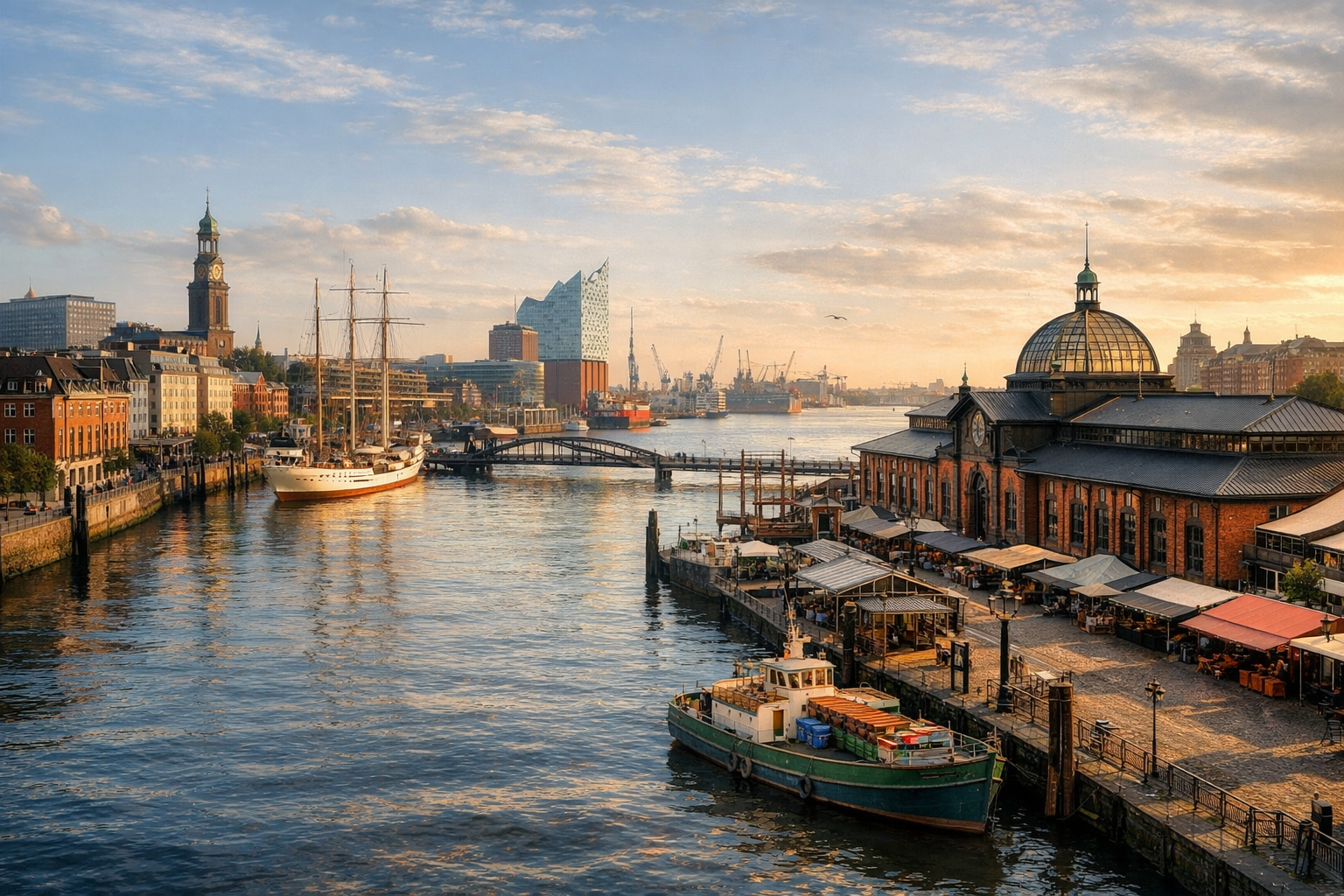
Hamburg seaport and fish market

Hamburg seaport and fish market

Discover Hamburg through its harbor heart, from the sleek waterfront of HafenCity to the bustling Port of Hamburg and the iconic Landungsbrücken. Walk beneath the Elbe through the historic Old Elbe Tunnel, soak up the energy of St. Pauli, and end the morning at the legendary fish market.

🧭 DAY-BY-DAY ITINERARY

Ready-made country and city routes with daily plans, sights, transport and accommodation. Buy PDF guides for independent travel.

🧭 DAY-BY-DAY ITINERARY


Day 1 — Hamburg: HafenCity, seaport, and Elbe panoramas

  • 🚶 It’s best to dedicate the first day to the side of Hamburg that immediately explains the city’s character: water, brick, docks, warehouses, and modern waterfronts. Start your morning in HafenCity and Speicherstadt — this is where old port Hamburg meets new architecture. Stop by Miniatur Wunderland if you want a vivid and very “alive” museum, or save the museum for a calmer pace and simply stroll along the canals and warehouse facades. Then head to the Elbphilharmonie: it’s worth allowing extra time for the ascent to the Plaza, because the way up is part of the experience. From the viewing platform, the entire port landscape reads especially well: cranes, piers, movement on the Elbe, bridge lines, and broad expanses of water. After that, take a break for lunch and rest along the HafenCity waterfront, then move on or walk to Landungsbrücken — this is the more “postcard-perfect” port, noisy, lively, and very Hamburg. It’s a good place to plan a walk along the water, a short stop by the piers, and an unhurried walk to the Old Elbe Tunnel. The tunnel itself is not just a crossing, but a rare urban experience: going down beneath the Elbe and emerging on the other side for an unusual view of the port and the center. It’s reasonable to allow 2.5–3 hours for this part of the route, including walking, stops, and rest. In the evening, return to St. Pauli or Landungsbrücken: in the soft evening light, the port is especially beautiful, and the first day will feel full but realistic, without an exhausting rush.


Day 2 — Hamburg: St. Pauli, fish market, and maritime history

  • 🚶 The second day makes most sense built around the city’s most famous morning ritual — the fish market. If your trip falls on a Sunday, come early: the atmosphere here matters no less than the shopping. The fish market in the Große Elbstraße area is all noise, traders’ shouts, fresh air from the Elbe, early breakfasts, flowers, baskets of fruit, and the feeling of the port as one huge living organism. After the market, give yourself time not to rush: walk along the water, look at the Altonaer Fischauktionshalle, and simply stay in the harbor’s morning rhythm. Then you can pause for coffee and a late breakfast, because an early start calls for real rest, not “heroics.” Closer to noon, move on to St. Michael’s Church — one of the city’s best architectural and symbolic landmarks. From there, it’s convenient to continue the day with a maritime-themed museum: Internationales Maritimes Museum Hamburg gives deeper context to everything you have already seen in the port — from shipping and navigation to the global history of maritime trade. If you want to end the route more calmly, save Planten un Blomen park or a short walk around Neustadt for the finale: after a loud early morning, a green and measured ending is especially pleasant. Time-wise, it’s best to plan the day flexibly: early market, then 1–1.5 hours of rest, followed by the museum or sightseeing part without rushing. This keeps the route full but human, taking into account sleep, travel time, and the need to catch your breath.

Flight tickets

eSIM for travel

Buy PDF guide

Buy PDF guide — 3.90 USD

PDF — 3.90 USD