
Buy PDF guide

Buy PDF guide — 25.90 USD

PDF — 25.90 USD

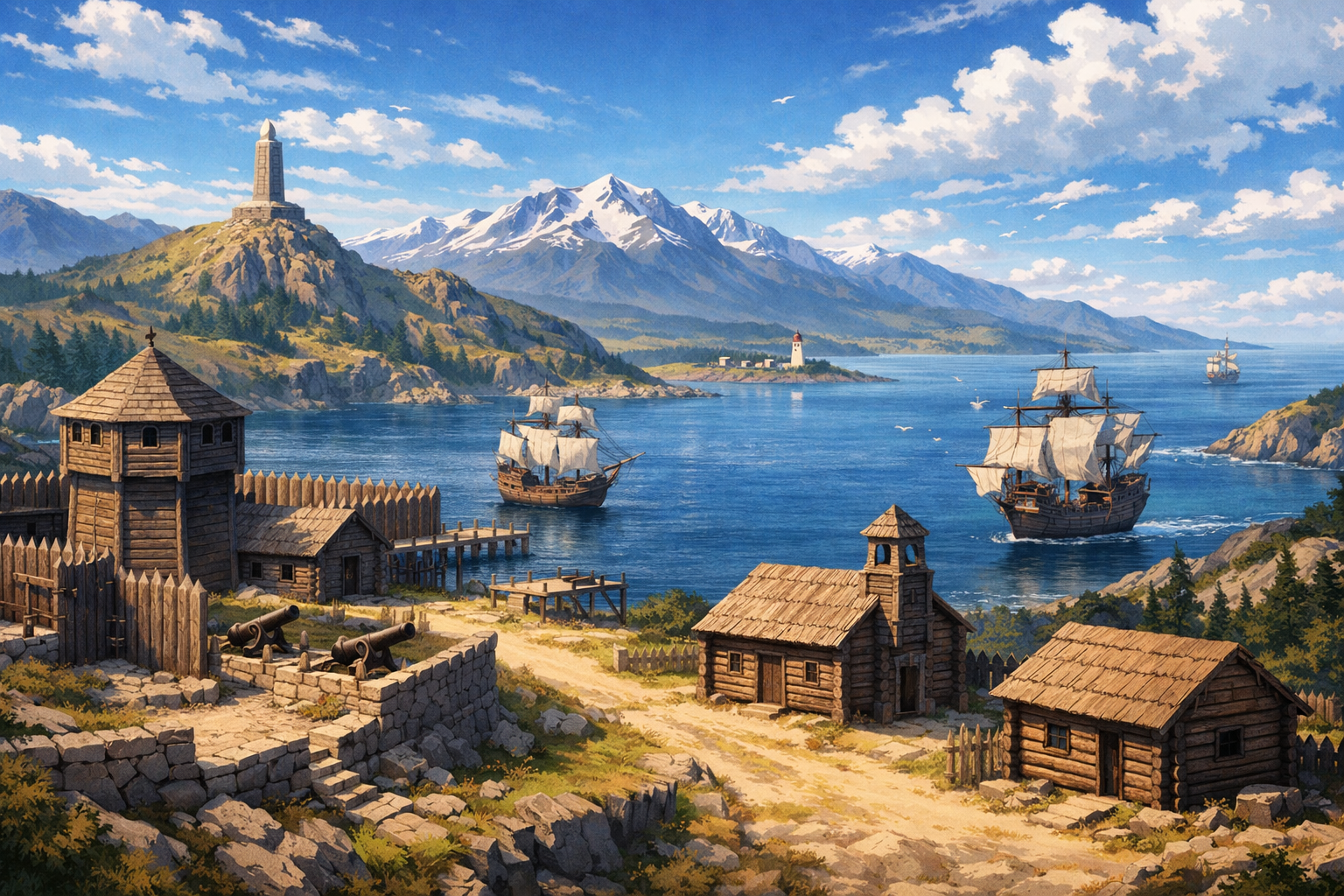
Fuerte Bulnes and the history of Magellan

Fuerte Bulnes and the history of Magellan

Step into the windswept history of the Strait of Magellan on a journey from Punta Arenas to Fuerte Bulnes and haunting Puerto del Hambre. In Parque del Estrecho de Magallanes, dramatic coastal views and powerful stories of exploration bring one of the world’s legendary waterways to life.

🧭 DAY-BY-DAY ITINERARY

Ready-made country and city routes with daily plans, sights, transport and accommodation. Buy PDF guides for independent travel.

🧭 DAY-BY-DAY ITINERARY


Day 1 — Punta Arenas: arrival at the edge of South America and a first look at the Strait of Magellan

  • ✈️ Arrival in Punta Arenas, the main urban center of Chilean Magallanes and a logical base for a historical route following in Magellan’s footsteps. From the airport to the center, it is usually wise to allow about 25–35 minutes by official taxi or pre-booked transfer; in windy weather and evening traffic it may take a little longer.

  • 🚶 After checking in, take a gentle acclimatization walk through the center: Plaza Muñoz Gamero, the facades of old mansions, views of the strait’s waters, and the low Patagonian sky immediately set the right historical tone. Punta Arenas is not just a starting point, but a city that grew out of the struggle to control the strategic passage between the oceans. Here it becomes especially clear why the story of Magellan is not only a story of travel, but also one of maritime geography, power, and survival at the end of the world.


Day 2 — Punta Arenas: Plaza Muñoz Gamero, palaces, and the city’s memory of the maritime age

  • 🚶 Dedicate the day to the historic core of Punta Arenas. Around the central square, you can read the architectural layer from the period when the city prospered as a southern port and trading hub. Pay special attention to the palatial and public buildings from the late 19th and early 20th centuries: this is no longer Magellan’s era, but it is precisely here that you can see how the discovery and subsequent development of the strait changed the fate of the region for centuries to come.

  • 🚶 A slow walk through the blocks around the square helps you see Punta Arenas as a “city after the great voyages”: European facade styles, the monumentality of public buildings, and the wealthy homes of merchant families look almost surprising at such a harsh southern frontier. In the evening, leave time to relax in a café or restaurant overlooking the historic center: Patagonian weather changes quickly, so this day is best kept unhurried.

Day 3 — Museum of the Magallanes Region: the context of colonization, navigation, and life by the strait

  • 🏛️ Today is a museum day. Start with the Museo Regional de Magallanes, where you can conveniently assemble the historical framework of the entire trip: the settlement of the region, the everyday life of settlers, the economic rise of Punta Arenas, and the cultural traces of life in the strait zone. It is an important “introductory hall” before the trip to Fuerte Bulnes: first you understand how the history of the region is structured, and then you head out to the place where that history begins abruptly and tangibly.

  • 🚶 After the museum, do not overload the day: leave time for a calm walk along the waterfront and an early dinner. Tomorrow’s and later excursions to the historical points south of the city will require energy, and the Magellanic wind makes even short walks more demanding than they seem on the map.

Day 4 — Nao Victoria Museum: Magellan, ships of discovery, and the tangible history of voyages

  • 🚕 In the morning, head to Museo Nao Victoria in the Río Seco area. From central Punta Arenas, it is convenient to allow about 20–30 minutes by taxi or rental car; public transport will take more time and require extra buffer for waiting.

  • 🚶 This museum is especially important for your theme because here the story of Magellan stops being an abstract textbook plot and becomes almost tangible. Replicas of historic ships let you feel the scale of 16th-century maritime expeditions: the cramped decks, dependence on the wind, the fragility of wooden construction in icy latitudes, and the extraordinary courage of those who set out in search of an unknown passage. It is worth spending the day thoughtfully and without haste: the exhibition is best experienced as emotional preparation for the trip to Fuerte Bulnes.

Day 5 — Parque del Estrecho de Magallanes: Fuerte Bulnes, the first major excursion to the site

  • 🚗 The main excursion of the route: Punta Arenas → Parque del Estrecho de Magallanes → Fuerte Bulnes. The distance from the city is about 52 km to the south, so it is reasonable to allow roughly 50–70 minutes each way depending on the weather, wind, and number of stops at viewpoints.

  • 🚶 Fuerte Bulnes is the place where the state history of Chile quite literally meets the elemental force of the Strait of Magellan. The first impression here is always twofold: on the one hand, it is a reconstructed outpost with wooden architecture that is almost intimate in scale; on the other, the surrounding landscape is so harsh and open that the small buildings seem like a gesture of stubbornness in the face of wind, cold, and geographical immensity. It is in this contrast that the power of the place is revealed.

  • 🚶 Explore the complex slowly: the bastions, wooden structures, the space of the former settlement, and the viewpoints over the strait. Here it is especially important not to “just look at the little houses,” but to read Fuerte Bulnes as a political and maritime statement: control of the strait, an attempt to establish a foothold at a key point in South America, and a response to the strategic value of the route that made Magellan famous. After the visit, be sure to plan a pause for rest and a hot drink: the constant wind tires you out faster than an ordinary city walk.

Day 6 — Fuerte Bulnes again: a second visit for trails, panoramas, and attentive reading of the landscape

  • 🚗 A second day at Parque del Estrecho is justified: this is not a place for ticking a box, but a rare historical landscape that unfolds in layers. A return visit allows you to see not only the fort itself, but also the trails, viewpoints, shoreline, and Magellanic forest, among which human presence feels almost temporary.

  • 🚶 If yesterday you focused on the fort itself, today shift the emphasis to the space around it. It is precisely the surroundings that explain why life here was so difficult: isolation, climate, logistics, dependence on supplies, and the constant pressure of nature. The panoramas of the strait are not simply beautiful — they help you understand what this maritime corridor looked like for the expeditions and colonial projects that followed the era of Magellan. It is best to allow at least half a day for walks and stops at miradores, plus time for the return and rest in the evening.

Day 7 — Puerto del Hambre: a tragic colonial chapter on the Strait of Magellan

  • 🚗 Another excursion to the south, but with a new emphasis: the ruins and grounds of Ciudad Rey Don Felipe, better known as Puerto del Hambre. In terms of time, the route is comparable to the trip to Fuerte Bulnes: about 50–70 minutes each way from Punta Arenas, including stops.

  • 🚶 This is one of the most powerful historical places in the region. If Fuerte Bulnes speaks of the state’s will to establish itself by the strait, then Puerto del Hambre speaks of the failure of a colonial project, hunger, isolation, and an almost silent tragedy. There is not the same visible architectural integrity as in the reconstructed fort, but there is the heavy force of the landscape and the knowledge of what happened on this shore.

  • 🚶 It is worth spending the day very calmly: walk through the site, pause at the information points, look at the strait, and give yourself time to reflect. In connection with the story of Magellan, this place shows that the discovery of the sea passage was only the beginning, while living in and controlling it turned out to be a far more complex, brutal, and long-lasting story.

Day 8 — Punta Arenas: the Maggiorino Borgatello Museum and the cultures of Patagonia

  • 🏛️ After several excursion days, return to the city rhythm and visit the Museo Salesiano Maggiorino Borgatello. This is an important point for understanding not only colonial and maritime history, but also the broader Patagonian context: nature, Indigenous peoples, ethnography, missionary presence, and scientific interest in the southern territories.

  • 🚶 What is especially valuable inside is that the museum brings together many stories that appear in fragments along the route: the strait, expeditions, settler life, the fate of the peoples of Tierra del Fuego, and the long process of turning the “edge of the map” into a space of museums, ports, and memory. It is a good idea to leave the second half of the day for rest: a walk without a tight program, shopping for books or postcards related to Magellan, and an early evening at the hotel.

Day 9 — Punta Arenas: Sara Braun Cemetery and the architecture of memory in the southern port

  • 🚕 Today’s route is less obvious, but very expressive: Cementerio Municipal Sara Braun. From the center, you can get here in 10–15 minutes by taxi, or devote time to a longer walk if the weather is calm.

  • 🚶 For a historical tour, this place is no less important than museum halls. The cemetery tells the story of Punta Arenas as a city of seafarers, entrepreneurs, migrants, and families whose lives were tied to the strait. The monumental entrance, the strict composition of the avenues, and the special silence of the cypresses create an almost theatrical space of memory. After the harsh shores of Fuerte Bulnes, this day feels like a human postscript to the whole story of the region.

Day 10 — Reserve day: a return trip to Fuerte Bulnes or a deeper city route

  • 🚗/🚶 This day is planned as a smart buffer. In Magallanes, the weather dictates the schedule more strongly than almost anywhere else: wind, rain, low cloud, and cold can make the first excursion less comfortable. If the previous days went smoothly, use the day for another trip to Fuerte Bulnes in better light, for photography, an extra walk on the trails, or a longer stay at the panoramic points.

  • 🚶 If the excursions have already gone well, spend the day in Punta Arenas like a researcher: return to the key city facades, your favorite museum hall, the waterfront, or a bookstore. Such a reserve day makes the itinerary realistic and keeps the trip from turning into a race, which is especially important in a region where the historical impression is closely tied to the weather and the condition of the landscape.

Day 11 — The story of Magellan in a final synthesis: a free day for thoughtful sightseeing and rest

  • 🚶 Dedicate the day to “assembling the meaning” of the whole trip. You can walk again through Plaza Muñoz Gamero, stop by a museum or café with a view of the city, review your notes and photos, and compare the shipboard history from Museo Nao Victoria with what you saw in the real landscape of Fuerte Bulnes and Puerto del Hambre. It is in such unhurried hours that the journey begins to come together as a coherent story.

  • 🚶 The story of Magellan is felt especially sharply here: not as the lone feat of a single navigator, but as the starting point for centuries of navigation, geopolitics, colonization, and memory. Leave time for proper rest before your flight as well: the far south does not like overloaded schedules, and strong wind and cold quietly drain your energy.

Day 12 — Departure from Punta Arenas: a final look at the Strait of Magellan

  • ✈️ Transfer to Presidente Carlos Ibáñez del Campo Airport. From the central part of Punta Arenas, it is usually wise to allow about 25–35 minutes; it is better to leave with extra time, especially for an early flight, strong wind, or the return of a rental car.

  • 🚶 If time allows, end the route with a short walk or at least one last look at the waters of the strait. After twelve days, the region feels different: Fuerte Bulnes is no longer a separate point on the map, but part of a larger story about how the sea passage discovered by Magellan changed this entire land — from harsh shores to city squares, from outposts to museums.

Flight tickets

eSIM for travel

Buy PDF guide

Buy PDF guide — 25.90 USD

PDF — 25.90 USD