
Buy PDF guide

Buy PDF guide — 3.90 USD

PDF — 3.90 USD

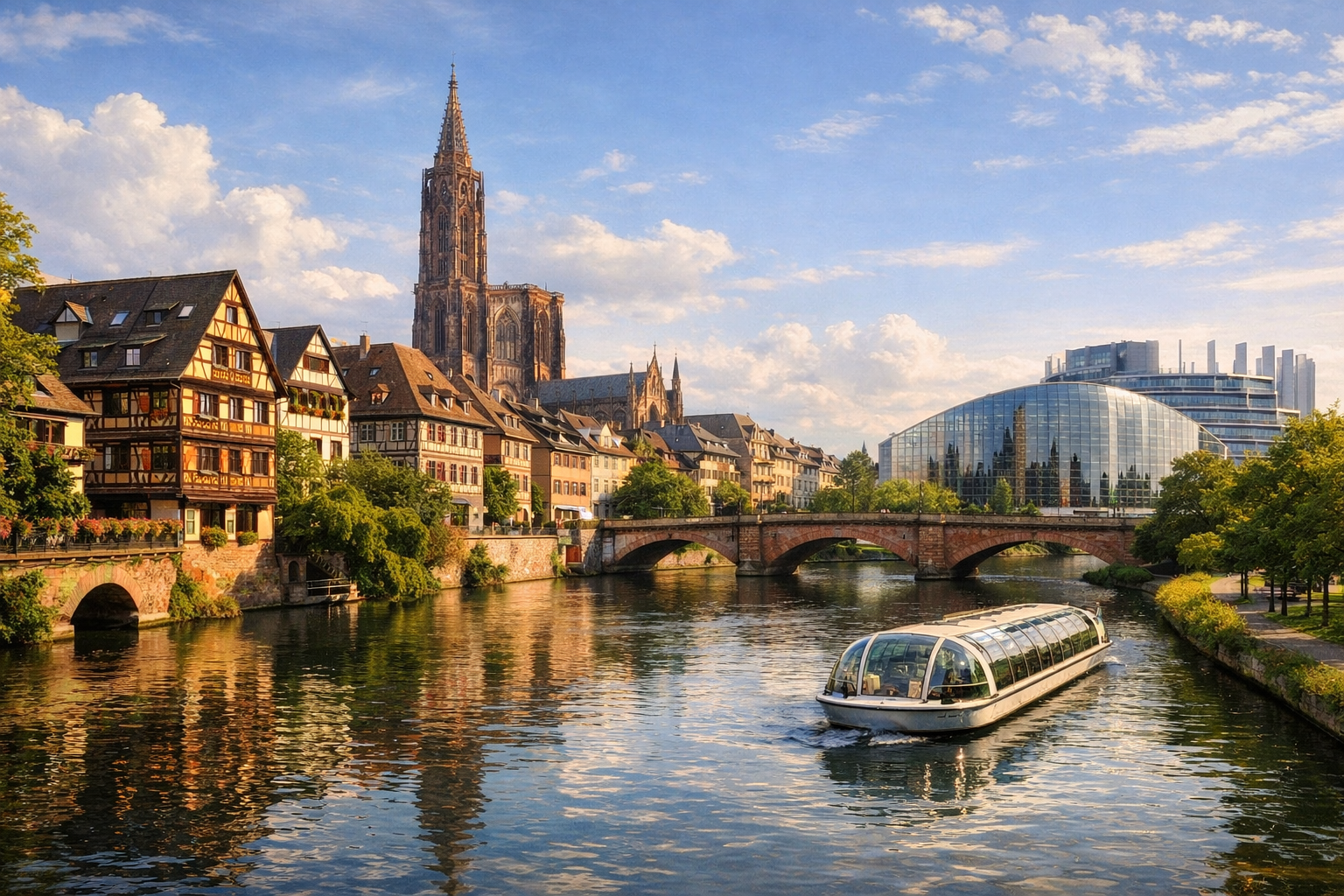
France, Strasbourg. A romantic weekend among the canals of La Petite France, half-timbered houses, Strasbourg Cathedral, and the European Quarter, with a possible ride on a river tram.

France, Strasbourg. A romantic weekend among the canals of La Petite France, half-timbered houses, Strasbourg Cathedral, and the European Quarter, with a possible ride on a river tram.

Spend a romantic weekend in Strasbourg, wandering the canals of La Petite France past flower-draped half-timbered houses and charming waterside lanes. Admire the soaring Strasbourg Cathedral, then drift toward the European Quarter—perhaps with a relaxing ride on the river tram.

🧭 DAY-BY-DAY ITINERARY

Ready-made country and city routes with daily plans, sights, transport and accommodation. Buy PDF guides for independent travel.

🧭 DAY-BY-DAY ITINERARY


Day 1 — Arrival, Petite France, the cathedral, and an evening on the water

  • 🚆 It is most convenient to plan your arrival at Strasbourg-Ville. From Strasbourg-Entzheim Airport, the fastest way to the central station is usually the TER regional train: the trip takes about 8–10 minutes, after which you can either walk to the historic center or take a tram. For a light weekend without too much rushing around, it is best to stay in a hotel in the Grande Île or Petite France area: this way you are immediately in the most beautiful part of the city and can do almost the entire route without unnecessary transfers. After check-in, leave your luggage, take a coffee break, and head out for your first walk at an unhurried pace — Strasbourg reveals itself best in a gentle rhythm, when you have time to notice reflections of houses in the water, little bridges, flower-filled balconies, and the changing light on old stone.

  • 🚶 The Petite France district is Strasbourg’s most photogenic and romantic face. It is a labyrinth of canals, narrow streets, and tall half-timbered houses with sloping roofs, where fishermen, tanners, and millers once lived. Today it is especially pleasant to stroll here as a couple with no particular destination: crossing little bridges, stopping along the quays, watching the water flow slowly beneath wooden facades, and catching that rare atmosphere in which the city feels at once French, German, and entirely unique — unmistakably Strasbourg. Be sure to walk to Ponts Couverts and the Vauban Dam: from the dam’s terrace you get some of the best panoramic views of the canals, towers, the rooftops of Petite France, and the cathedral spire in the distance.

  • ⛪ After your walk along the water, head toward Cathédrale Notre-Dame de Strasbourg — the great pink cathedral built of Vosges sandstone that quite literally dominates the city skyline. The walk from Petite France to the cathedral usually takes around 15–20 minutes through the historic streets of Grande Île. The approach to the cathedral is especially impressive because of how it appears gradually: first the carved spire emerges between the buildings, then the facade with its endless stone lacework, arches, statues, and famous Gothic verticality. Inside, it is worth staying not just five minutes but at least for a calm look around: the cathedral is not only architecturally grand, but also creates a very intimate, almost meditative feeling thanks to the light, stained glass, and scale of the space. Nearby, it is easy to explore the cathedral square, Maison Kammerzell, and the neighboring old streets, which become especially beautiful toward evening.

  • 🛥️ If you want to see as much as possible without getting tired, a Batorama river tram ride fits perfectly into the same day. The classic one-hour route along the canals lets you see the historic center, parts of Neustadt, and depending on the chosen departure, part of the European Quarter. This is an especially good choice for a romantic weekend: after the walking portion, you can simply settle in by the window, let your feet rest, and watch the city unfold in layers — from medieval bridges and towers to the more austere facades of imperial Strasbourg and the symbols of modern Europe. For the evening, it is best to allow extra time and check departure schedules in advance.

  • 🌙 End the day with a slow evening in the center: return to Petite France or the cathedral when the main daytime crowds have already thinned out. Strasbourg in the evening is especially lovely in the warmer months — lights reflect in the canals, the wooden houses take on an almost theatrical depth, and the squares around the cathedral become quieter and more sensual. For a weekend in an easygoing format, this is the perfect finale: no rush, no long transfers, just the feeling that the city’s main image has already settled into your memory on the very first day.


Day 2 — Orangerie, the European Quarter, and a museum highlight before departure

  • 🚶 The second day is best started without an early rush: after breakfast, head toward Parc de l’Orangerie — the city’s most elegant green space. From the center, it is easy to get there by tram or bus, but in good weather you can walk part of the way if you want to soak up a little more of the city’s facades and street rhythm. Orangerie Park creates a completely different mood compared with Petite France: instead of medieval density, here you find broad avenues, calm lawns, water, trees, and the measured atmosphere of an old European resort. It is a good place for a peaceful walk as a couple, a short pause on a bench, and a breather before the more official part of the route.

  • 🏛️ From the park, it makes sense to continue into the European Quarter. It is here that Strasbourg most clearly shows its second identity — not only a fairy-tale old town, but also one of the most important capitals of modern Europe. The area around the European Parliament, Council of Europe, and other institutions feels noticeably different: more open space, strict modern architecture, wide perspectives, and a sense of the continent’s political geography. Even if you do not plan to go inside, simply walking through this district provides an interesting contrast to yesterday’s half-timbered houses and canals. For a short weekend, it gives the route real depth: in two days, you see both medieval Strasbourg and the city of European institutions.

  • 🖼️ Before returning to the center, add one museum highlight — without overloading the day, just one choice depending on your mood. If you want to understand the city more deeply, Musée Historique de la Ville de Strasbourg is a good fit, where Strasbourg’s story unfolds from the Middle Ages to the era of European institutions. If you are more interested in the atmosphere of the region and everyday Alsatian life, keep in mind that Musée Alsacien is currently closed for a long-term renovation, so it is better not to make it a main stop. For a more modern and visually light ending, Musée d’Art Moderne et Contemporain is an excellent choice: a bright space by the water, a strong collection of 19th–21st century art, and a convenient location not far from Petite France. Another elegant option is Musée Tomi Ungerer, dedicated to illustration and to one of the brightest artists associated with Strasbourg.

  • ☕ After the museum, return to the center for a late lunch or coffee, leaving 1–1.5 hours of buffer time before departing for the station or airport. From Grande Île to Strasbourg-Ville, it is usually convenient to go by tram in 10–15 minutes including the walk to the stop, and if you are staying right in the center, walking in about 20 minutes is also possible. For a flight from Strasbourg-Entzheim, plan first for the short transfer to the station, then the TER train to the airport, plus standard airport time. This kind of ending makes the trip feel truly weekend-like: no fuss, minimal logistics, and the sense of having had a full yet not tiring introduction to Strasbourg.

Flight tickets

eSIM for travel

Buy PDF guide

Buy PDF guide — 3.90 USD

PDF — 3.90 USD