Buy PDF guide

Buy PDF guide — 8.90 USD

PDF — 8.90 USD

France, Lyon. Gastronomic Lyon without a restaurant marathon — markets, bakeries, regional cuisine, small gourmet establishments, Croix-Rousse, the riverbanks, and free time for your own discoveries.

France, Lyon. Gastronomic Lyon without a restaurant marathon — markets, bakeries, regional cuisine, small gourmet establishments, Croix-Rousse, the riverbanks, and free time for your own discoveries.

Lyon is a feast for the senses, where market stalls, neighborhood bakeries, and small gourmet spots reveal the rich flavors of the Rhône without turning your stay into a nonstop dining tour. Wander through Croix-Rousse, linger along the riverbanks, and leave room for your own delicious discoveries.

🧭 DAY-BY-DAY ROUTE

Ready-made country and city routes with daily plans, sights, transport and accommodation. Buy PDF guides for independent travel.

🧭 DAY-BY-DAY ROUTE


Day 1 — Presqu’île and the banks of the Saône: first encounters with the market, bakeries, and Lyon classics

  • 🚆 Arrival in Lyon is easiest to plan via Part-Dieu station or Lyon–Saint-Exupéry Airport. From the airport, the fastest way into the center is the Rhônexpress to Part-Dieu: under normal conditions, the trip takes about 30 minutes, and trains run frequently throughout the day. After check-in, it’s better not to rush into an overly packed schedule, but to start the trip gently and deliciously — that’s when Lyon reveals itself at its best.

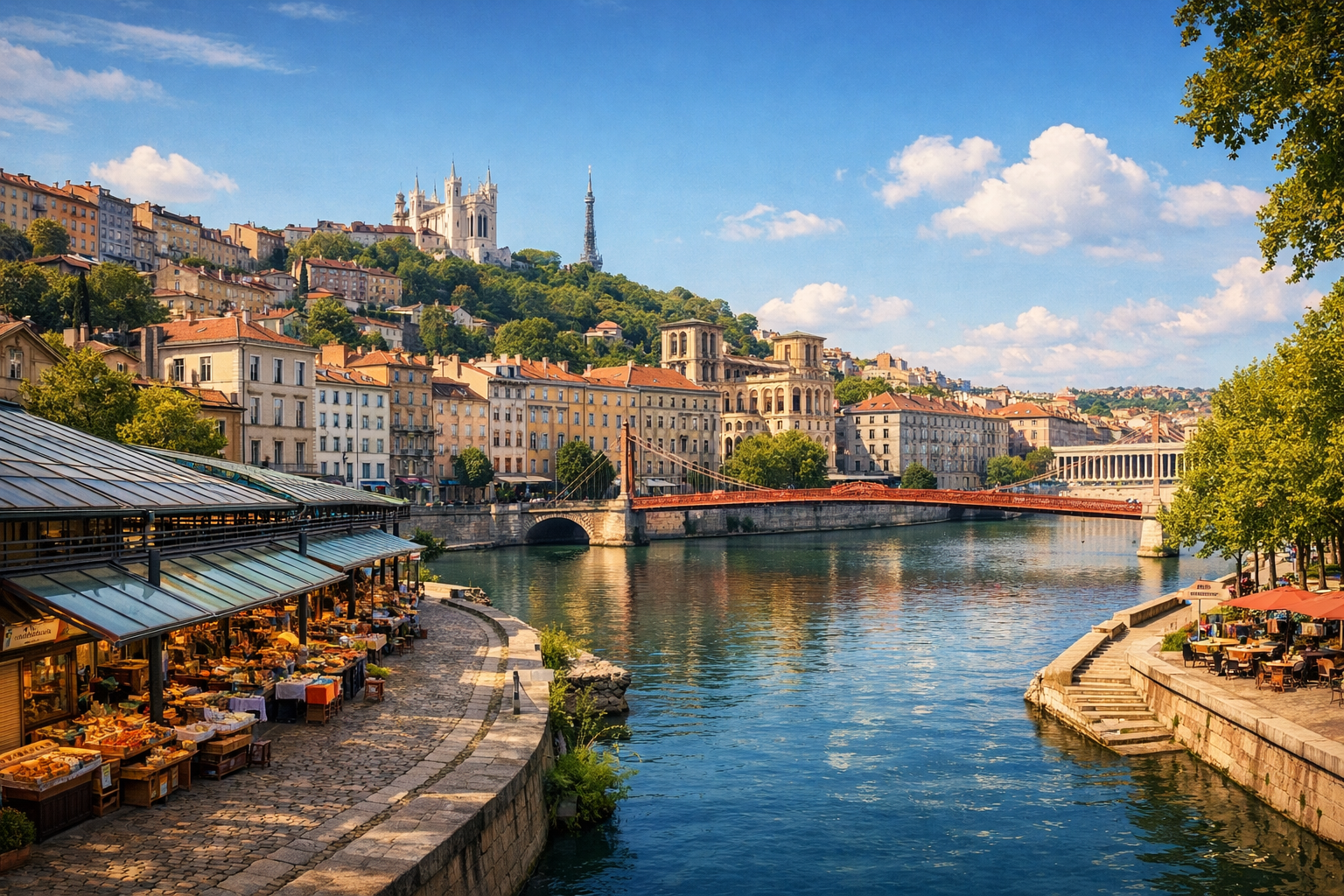
  • 🥐 Start the morning on Presqu’île with an unhurried coffee and pastry, then head to Marché alimentaire Saint-Antoine / Célestins, Quai Saint-Antoine, 69002 Lyon. This is one of the city’s most pleasant markets for a first dive into Lyon’s gastronomy: not a staged museum piece, but a living urban rhythm — stalls with cheeses, cured meats, poultry, fish, seasonal fruit, bread, pastries, and bottles from the Rhône Valley. In good weather, the riverfront is especially beautiful in the morning: the river, the stone facades of the old town across from you, the smell of fresh bread, and that distinctly Lyon balance between everyday life and gourmet culture. Come here not for a heavy lunch, but for small tastings: a piece of saint-marcellin, a little saucisson, fresh berries, a warm baguette, perhaps a jar of artisanal jam to take home as a gift.

  • 🚶 From the market, it’s easy to move into the streets around Bellecour and rue Auguste Comte, where a relaxed “bakery walk” works perfectly without overloading the day. In Lyon, it’s worth seeking out not only desserts, but also local flavors: praline rose, pies made with it, good pain au levain, and seasonal fruit tarts. The day is intentionally kept light: instead of a list of ten stops, choose 2–3 well-picked ones so you can keep both enjoyment and appetite.

  • 🍫 For a sweet break, Maison Sève Saint-Antoine, 29 Quai Saint-Antoine, 69002 Lyon, is a great choice, or the boutique in Halles de Lyon Paul Bocuse. Maison Sève is one of Lyon’s notable addresses for chocolate and elegant pâtisserie; here you can try signature sweets, see the modern side of Lyon taste, and, if you wish, pick up something for an evening picnic by the river.

  • 🍽️ For dinner, it’s better to choose one good bouchon rather than a “restaurant marathon.” Daniel & Denise Saint-Jean, 36 rue Tramassac, 69005 Lyon, is perfect for the first evening: it’s a convenient option after a walk through the old town and a good way to get acquainted with traditional Lyon cuisine in a warm, approachable setting. This is the right place to try quenelle de brochet with Nantua sauce, pâté en croûte, Lyon salads, or more seasonal dishes. It’s best to book in advance, especially for Friday and Saturday. For travelers with dietary restrictions, it’s wise to notify the restaurant at the time of booking: classic bouchons feature a lot of meat, cream sauces, offal, and fish-based dishes, so vegetarian and gluten-free options should be checked ahead of time rather than on the spot.

  • 🌙 End the day with a walk along the banks of the Saône and through Vieux Lyon. In the evening, the city becomes almost theatrical: ochre facades, bridges, reflections in the water, and the pleasant feeling that you’re not “working through a checklist,” but actually living in the rhythm of gastronomic Lyon.


Day 2 — Halles de Lyon Paul Bocuse and the Part-Dieu district: a temple of products, tastings, and a cooking workshop

  • 🧀 Today is devoted to the product itself. In the morning, head to Halles de Lyon Paul Bocuse, 102 Cours Lafayette, 69003 Lyon — the legendary covered market often seen as a concentration of Lyon’s gastronomic identity. It’s best to come relatively early, while trade is lively and before you’re tired from impressions. The idea is not to try everything at random, but to build a meaningful gastronomic route: cheese, charcuterie, bread, oysters or fish, chocolate, pâtisserie, and a glass of wine or an aperitif break.

  • 🥖 Inside the Halles, it’s especially easy to observe how local gastronomy works without any parade of formality: renowned maisons and family-run vendors coexist side by side, and conversations about cheese maturation, the origin of poultry, fruit seasonality, and wine style sound completely natural. This is the best place to understand why Lyon is called the gastronomic capital not only because of its restaurants, but because of its relationship with the product itself. Set aside at least 2–3 hours if you like choosing without rushing.

  • 🍰 For the dessert part of the day, pay attention to Maison Sève in the Halles, 102 Cours Lafayette, 69003 Lyon. If you see Lyon praline specialties, boxes of chocolate, or seasonal tartes, don’t rush to buy too much at once: it’s better to arrange one tasting for two and save room for what comes next.

  • 👩‍🍳 After lunch, add a practical gastronomic experience: a cooking class or tasting workshop. A realistic option is L'Atelier Gourmand, 8 rue Etienne Dolet, 69003 Lyon, where cooking sessions are held; participation must be booked in advance, and the exact theme of the class is best checked before the trip. If you’d rather work with flavor and terroir than cook, an alternative is a wine tasting format, such as Wine Tasting by Guyot, 32 quai Saint-Antoine, 69002 Lyon, or Chai Saint Olive, 34 rue Malesherbes, 69006 Lyon. For couples, this is an especially successful part of the route: the day gains not only flavor, but emotional memory.

  • 🍷 Leave the evening free or keep it very light: after the Halles and a workshop, a full late dinner is often unnecessary. The best format is a small gourmet spot focused on sharing plates, a cheese board, a glass of Côtes du Rhône or Beaujolais, and dessert. If you want one truly significant dinner on the trip, you can make this evening the “big” one and book La Mère Brazier, 12 Rue Royale, 69001 Lyon, in advance. This is a historic address of Lyon gastronomy, open Monday to Friday for lunch and dinner, and it should only be planned with a reservation. Such a dinner is best seen not as a required “box to tick,” but as a rare evening where the city’s history is felt through the table setting, the rhythm of the dining room, and respect for the classics.

  • 💡 Options for dietary restrictions: in the Halles it is easier to put together gluten-free snacks and à la carte products than in traditional bouchons. For vegetarians, it’s more convenient to focus on cheeses, vegetable tartlets, salads, pastries without meat fillings, and workshops with a pre-arranged menu. For lactose intolerance and allergies, it’s important to write to class organizers and restaurants in advance — in Lyon this is standard practice and worth using.

Day 3 — Croix-Rousse: the canuts district, artisanal sweets, and a calm gastronomic rhythm

  • 🚇 In the morning, head to Croix-Rousse — a district that gives Lyon a completely different mood. This is no longer the grand Presqu’île or the “temple of product” that is the Halles, but a more intimate, local, almost village-like city on a hill. Couples especially enjoy walking here: the streets are calmer, with many small shops, viewpoints, terraces, and historic passageways. The easiest way is by metro line C to Croix-Rousse station, then simply continue on foot.

  • 🥐 Start with a slow breakfast in the neighborhood and a walk around place de la Croix-Rousse and place des Tapis. Here it’s best not to hunt for a list of the “most famous places,” but for the mood of the district itself: artisan boulangeries, windows with tarte à la praline, chocolate, local delicacies, small fromageries, and épiceries fines. In this area, it’s especially pleasant to buy food in small portions and create your own gastronomic route as you go.

  • 🍫 An essential sweet stop is Maison Sève Croix-Rousse, 10 rue Victor Fort, 69004 Lyon. The boutique is located in an atmospheric setting and fits the rhythm of the district well: people come here not only to buy, but also for the aesthetics of artisanal Lyon. If you want a gift, this is one of the most reliable places for chocolate and elegant sweets; if you want to try something right away, share one dessert between two and continue your walk without overdoing it.

  • 🏘️ After the gastronomic stops, spend some time on the canuts quarter itself: its staircases, traboules, workshops, atmosphere, and viewpoints. Croix-Rousse matters on this route not as a “sight between meals,” but as a space where gastronomy is connected to everyday urban life. Free time works especially well here: pop into a cheese shop, buy a bottle for the evening, pick up bread, sit on a bench overlooking the city, and don’t rush anywhere.

  • 🍽️ For lunch or an early dinner, Daniel & Denise Croix-Rousse, 8 rue Cuire, 69004 Lyon, is a logical choice. This address fits the route particularly well from a logistics point of view: you are already in the area, there is no need to go back down to the center, and the cuisine remains firmly Lyonnais in spirit. It’s best to book in advance. If you want the classics, go for quenelle, pâté en croûte, or a seasonal dish; if you don’t eat offal or heavy sauces, ask the staff to guide you toward lighter options. In traditional Lyon cuisine, this really matters.

  • 🌇 In the evening, you can walk down toward the riverbanks or stay in the neighborhood a little longer. For couples, this is one of the most pleasant days of the whole trip: it’s not about “making sure to fit everything in,” but about a city that reveals itself through details — a pâtisserie window, the smell of bread, conversations over a glass of wine, and the feeling that there is still room for your own discoveries.

Day 4 — Vieux Lyon, Fourvière, and a finale with a view: gastronomy, history, and one memorable dinner

  • 🚶 It’s best to devote the last day to the Vieux Lyon + Fourvière combination, because this is where gastronomic Lyon connects most beautifully with historical Lyon. Start the morning in the old town with a light breakfast and a short walk through the Saint-Jean streets. This is the best time to see the district before the crowds: stone courtyards, Renaissance facades, shops, quiet squares, and the feeling of an old trading city where food has always been part of the local character.

  • 🧺 If you didn’t join an organized food tour the day before, today you can add a walking-tasting format through Lyon Food Tour or a similar local food tour, which is booked in advance and usually combines 3.5–4 hours of walking around Vieux Lyon with several gastronomic stops. This option is especially convenient for those who want, on the final day, not to search for everything on their own, but to hear stories about mères lyonnaises, bouchons, cheeses, charcuterie, and sweets from a local guide.

  • ⛪ After lunch, head up to Fourvière and Lugdunum. Even on a food-focused trip, this makes sense: Lyon cannot be understood through the plate alone, and the hill provides that panoramic finale that ties the journey together. Lugdunum – Musée et théâtres romains, 17 rue Cléberg, 69005 Lyon, and 6 rue de l'Antiquaille, 69005 Lyon, is an excellent cultural accent before the final evening. You can get there by funicular or walk up if you want some gentle activity and beautiful views.

  • 🧀 In the second half of the day, leave free time for final purchases: a praline tarte, a good vacuum-packed cheese, saucisson sec, chocolate, a bottle of wine from Beaujolais or the northern Rhône. This is an important part of a gastronomic route: Lyon is special not only because of what you ate here, but also because of what you took away with you as a continuation of the experience.

  • 🍽️ The final dinner should be memorable, but not excessively heavy. If La Mère Brazier wasn’t chosen on the second day, today is the best time for such a finish: a historic address, thoughtful cuisine, and the feeling that you’re ending the journey on a high note. If you prefer a more relaxed finale, stay in Vieux Lyon and choose a calm bouchon or a small gourmet place with wine and several sharing plates. For couples, the format of “one long dinner instead of three random ones” works especially well.

  • ✈️ If you’re flying out the next day, don’t overload the evening. If your departure is late and on the same day, make your last meal an early one. In gastronomic Lyon, it’s more important to leave with a pleasant aftertaste than to try everything. In 4 days, you will already have seen the essentials: the market as the heart of the city, the Halles as a gastronomic manifesto, Croix-Rousse as the district of artisanal taste, and Vieux Lyon as the historic stage where Lyon cuisine remains alive and natural.

Flight tickets

eSIM for travel

Buy PDF guide

Buy PDF guide — 8.90 USD

PDF — 8.90 USD