
Buy PDF guide

Buy PDF guide — 10.71 USD

PDF — 10.71 USD

France and the Alpine Rings. Radial hikes in the Chamonix Valley. Season: June - September. Difficulty: medium or high.

France and the Alpine Rings. Radial hikes in the Chamonix Valley. Season: June - September. Difficulty: medium or high.

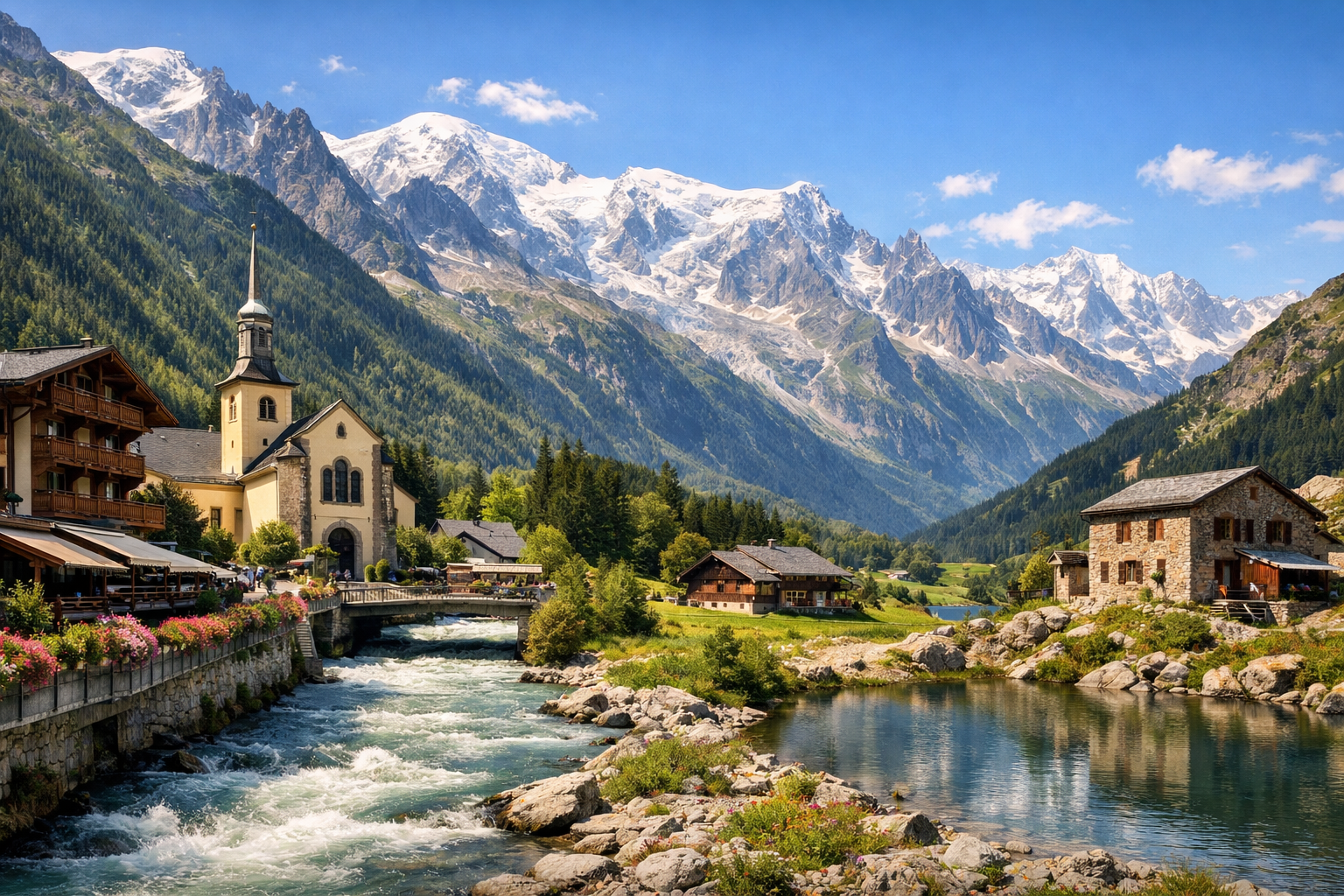
France’s Alpine Rings lead you through the Chamonix Valley on striking radial hikes, from Les Houches and Chamonix to Le Tour and Passy beneath the Mont Blanc massif. Best from June to September, this medium to high difficulty adventure pairs dramatic mountain scenery with classic alpine villages and crisp high-altitude trails.

🥾 DAY-BY-DAY ROUTE

Ready-made country and city routes with daily plans, sights, transport and accommodation. Buy PDF guides for independent travel.

🥾 DAY-BY-DAY ROUTE


Day 1 — Les Houches: forest trail and Merlet nature park

  • 🥾 The first day is best kept as an acclimatization day and very scenic: a walk along the forested slope above the Chamonix Valley to Parc de Merlet and back via a section of Petit Balcon Sud. This day is about conifer forest, gentle alpine meadows, viewpoints, and wide views of the Mont Blanc massif. The active part of the day usually takes 3–4.5 hours, about 7–10 km and 350–500 m of ascent depending on the starting point. The difficulty is moderate: the trail is well known, marked, without technical sections, and suitable for a regular hiker with good footwear. In the park itself, you can see mountain animals and relax with panoramic views of glaciers and granite peaks, without entering a wild high-alpine zone. Seasonally, it is important to keep in mind that after rain, forest roots and soil can be slippery, and in June the early morning sections can be cool. Public transport does not go all the way to the park, so it is more convenient to walk from Les Houches or take a taxi to the start of the approach. This is a good start to the tour without overloading yourself, so you can get used to the valley terrain.


Day 2 — Chamonix: Grand Balcon Nord from Plan de l’Aiguille to Montenvers

  • 🥾 On the second day, one of the valley’s most famous safe panoramic walks: Grand Balcon Nord from Plan de l’Aiguille to Montenvers. The route is a high-altitude balcony trail with views of glaciers, the Chamonix aiguilles, and the valley far below, but without mountaineering obstacles if you stick to the official summer route. Usually the route takes 3–4.5 hours of walking time, around 6–8 km, with moderate elevation changes and a total ascent of about 250–400 m. The difficulty is moderate / in places closer to high because of the altitude, duration, and some rocky sections, but it is still a popular marked hike without crampons, ropes, or ice gear. It is most convenient to start by taking the cable car to Plan de l’Aiguille, and return from Montenvers on the famous train to Chamonix. Before setting out, it is important to check the weather and trail status at the Office de Haute Montagne: in June, snow can sometimes linger on shaded sections, and in fog the route loses part of its dramatic appeal. It is worth starting early so you can complete the route at a relaxed pace, make photo stops, and not depend on the last lift and train departures.

Day 3 — Chamonix / Flégère: Lac Blanc via Aiguilles Rouges

  • 🥾 The main day of the tour is the hike to Lac Blanc in the protected Aiguilles Rouges area. This is a classic alpine walk to a mountain lake with one of the most recognizable reflections of the Mont Blanc massif. The route is a mountain trail through a nature reserve, with forest sections lower down, subalpine meadows, stone steps, and viewpoints by the lake. If you ascend via La Flégère, the active part usually takes 4.5–6 hours, about 8–12 km and 500–750 m of ascent depending on the chosen variation. The difficulty is high for a regular tourist, but without technical mountaineering: you need a good pace, decent fitness, and an early start, but the route is popular, well known, and does not require special equipment in stable summer conditions. It is important to remember the reserve rules: swimming in the lake, entering the water with flotation devices, and littering are not allowed. In June, snow above 2000 m is still possible, so this day especially depends on the actual seasonal conditions; sometimes it is wiser to switch the goal to Lacs des Chéserys or a shortened outing if snow patches remain on the upper section. In July–September, the trail is usually at its most comfortable, but in peak season it is better to start early in the morning because of the route’s popularity.

Day 4 — Le Tour: Aiguillette des Posettes

  • 🥾 The fourth day is dedicated to the northeastern part of the valley — a hike to Aiguillette des Posettes from Le Tour. This is a more open, airy route with alpine pastures, open slopes, flower meadows, and wide views over two valleys at once — Chamonix and Vallorcine. The active part usually takes 4–5.5 hours, around 8–10 km and 650–800 m of ascent if walking from Le Tour. The difficulty is moderate / high: the climb is noticeable, but the trail is well known, straightforward, and suitable for a hiker without special equipment in dry summer weather. This is a good choice for those who want a real mountain day without dangerous ridgelines or technical obstacles. In June, snow may still remain on the upper slopes, and in strong wind the exposed sections feel much colder than down in the valley. It is worth bringing a windproof layer, water, and sun protection: there is less shade here than on forest routes. The start is easy to reach by valley bus to the Le Tour stop.

Day 5 — Passy: Lac Vert and a gentle walk at the foot of the Fiz range

  • 🥾 The final day is best kept lighter and restorative: a walk to Lac Vert in the Passy area. This day is about forest, calm water, gentle shores, family-friendly viewpoints, and a relaxed finish to the active part of the trip. The active part usually takes 1.5–3 hours, a distance of 3–6 km, with minimal or slight elevation gain depending on the chosen loop around the lake and nearby trails. The difficulty is easy / moderate, and the route suits almost any regular tourist and requires nothing more than comfortable footwear. The lake is known for its rich green color and the beautiful backdrop of the Fiz massif, and the walk itself balances the previous more demanding days well. Seasonal details are simple: on summer weekends there can be more people here during the day, after rain the forest sections are damp, and in hot weather it is better to come in the morning or closer to evening. This day works well as a half-day hike before departure or as a soft end to the tour without a heavy нагрузка.

Flight tickets

eSIM for travel

Buy PDF guide

Buy PDF guide — 10.71 USD

PDF — 10.71 USD