
Buy PDF guide

Buy PDF guide — 6.90 USD

PDF — 6.90 USD

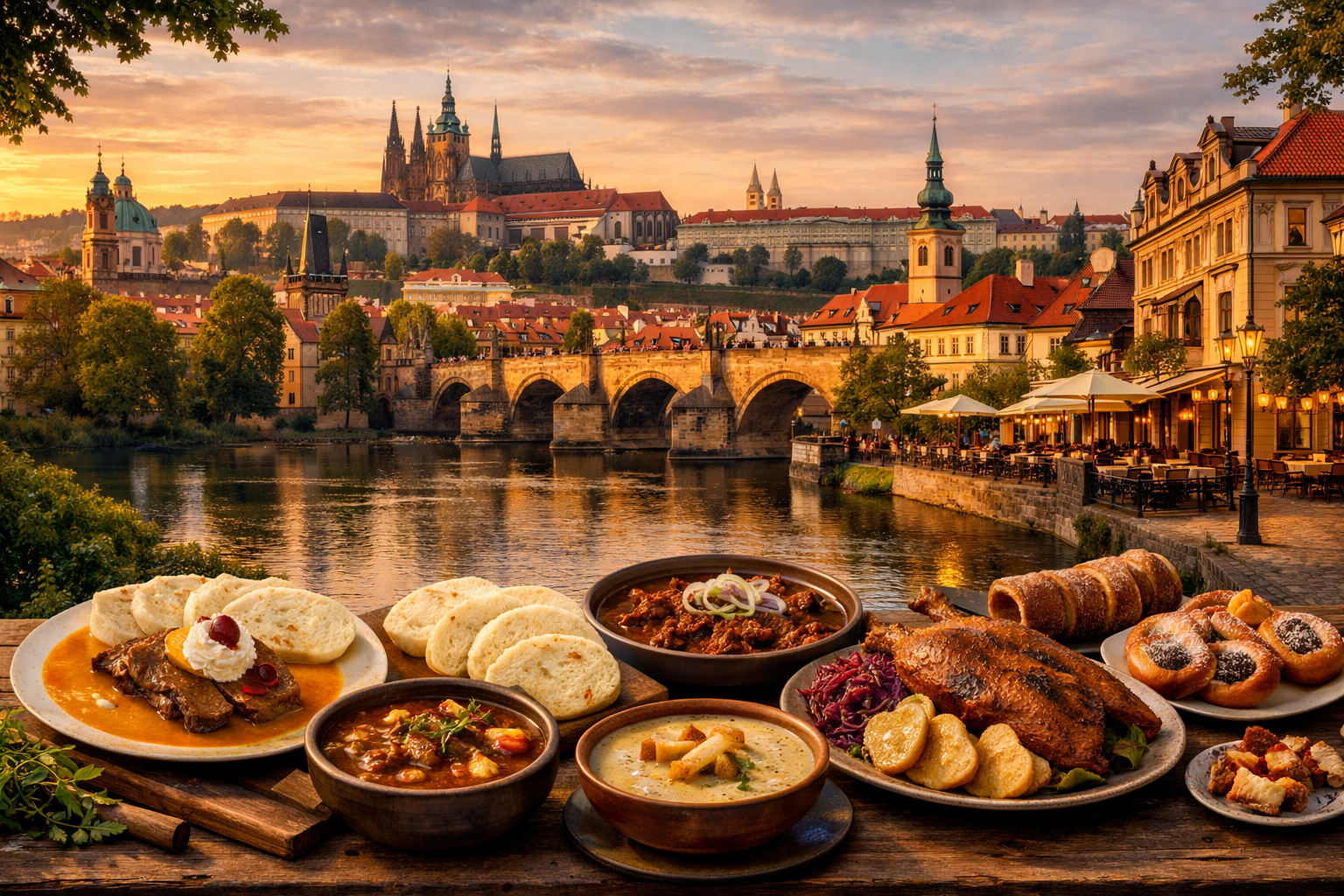
Czech Republic, Prague. Gastronomic Prague. Getting to know classic Czech cuisine: svíčková, goulash, duck, dumplings, soups, pastries, historic cafés, and traditional restaurants.

Czech Republic, Prague. Gastronomic Prague. Getting to know classic Czech cuisine: svíčková, goulash, duck, dumplings, soups, pastries, historic cafés, and traditional restaurants.

Prague is a feast of rich flavors and old-world charm, where classic Czech dishes like svíčková, goulash, roast duck, and dumplings are served in atmospheric taverns and traditional restaurants. Between bustling markets, elegant historic cafés, hearty soups, and fresh pastries, the city invites you to discover its culinary soul one bite at a time.

🧭 DAY-BY-DAY ROUTE

Ready-made country and city routes with daily plans, sights, transport and accommodation. Buy PDF guides for independent travel.

🧭 DAY-BY-DAY ROUTE


Day 1 — Old and New Town: historic cafés, market, and Czech cuisine classics

  • 🚶 Start the morning calmly, without rushing, in central Prague with breakfast at Café Louvre, one of the city’s most famous historic cafés at Národní 22. This place is especially well suited for a first introduction to Prague’s gastronomic culture: high ceilings, the atmosphere of an old European coffeehouse, a long breakfast rhythm, and an easy-to-understand menu. It’s convenient to have coffee, traditional pastries, eggs, bread, dessert, or a more substantial breakfast here, and the whole format sets the right tone for the trip — Prague opens up not only through towers and squares, but also through the culture of lingering at the table. The café usually opens in the morning, and on weekends starts a little later, so arriving early on a weekday is especially convenient for couples and solo travelers.

  • 🚶 After breakfast, walk about 10–15 minutes toward the Old Town to Havelský Market. This is the oldest operating market in the historic center, where today the main value is not “serious shopping” but the feeling of everyday city life itself: fruit, berries, seasonal produce, honey, nuts, simple local snacks, and the souvenir buzz of old Prague. It’s better to think of it as a short gastronomic stroll and a place for a few small purchases for the road rather than as the city’s main food market. If you want a more substantial market experience, that will come on the following days, but this is exactly the right place to see how food is woven into the fabric of the center and its old streets.

  • 🚶 From the market, continue your walk through the Old Town at a very easy pace: cobbled streets, house facades, passages toward Old Town Square, and nearby lanes create the perfect background for a first day without overexertion. This stretch is practical as well: you give yourself time after breakfast, avoid overloading the route with transport, and naturally approach lunchtime. Along the way, pay attention to displays with chlebíčky, koláče, and other everyday Czech foods — Prague is interesting not only for its “showpiece” restaurants, but also for how food is present at every step.

  • 🍽️ Plan lunch at Lokál Dlouhááá, one of the most famous modern addresses for getting to know honest, solid Czech cuisine without theatricality. The restaurant is at Dlouhá 33, usually opens at 11:00, and it’s wise to come either right at opening or reserve a table in advance, because the place is popular with both locals and visitors. This is exactly the right spot to try what this tour is built around: guláš, svíčková na smetaně, seasonal soups, pork dishes, simple desserts, and beer poured in the Czech tradition. This is not a museum-style “reconstruction of cuisine,” but a living city dining room of the highest order, where Czech classics are served confidently and without compromise.

  • 💡 For travelers with dietary restrictions, it’s convenient at Lokál to ask in advance about sauce ingredients, whether broths contain meat, and whether side dishes can be replaced. Czech cuisine often uses creamy sauces, meat-based stocks, and wheat-flour dumplings, so vegetarians and people with gluten or lactose intolerance should ask directly when ordering. In central Prague, staff in popular establishments are usually used to such requests. For an easy day, a good strategy is to order one classic dish per person and share dessert later, without overloading the first day.

  • 🏛️ After lunch, it’s worth walking toward the Jewish Quarter or the embankment, but without a dense museum program: today’s route is primarily gastronomic. You can pause for coffee, briefly look into the atmospheric passages of the New Town, or return to the hotel to rest. This matters logistically: classic Czech cuisine is hearty, and if you want to have a proper dinner, it’s worth leaving at least 4–5 hours between meals and not turning the day into an endless tasting session.

  • 🍽️ In the evening, head back to the Národní area if you want to end the day beautifully and without complicated logistics. Café Louvre works not only for breakfast, but also for a late dinner or dessert: you can close out the day more gently here — with soup, a warm dish, wine, coffee, and a classic Prague dessert. If lunch at Lokál was very substantial, a sensible alternative is to limit yourself to coffee and something sweet. This rhythm makes the route realistic: in this tour, Prague reveals itself not in a rush, but through the alternation of rich food, walks, and pauses.


Day 2 — Karlín and market/culinary experience: artisan bread, local products, and a modern take on Czech flavors

  • 🚆 Start the morning in Karlín — one of Prague’s most pleasant neighborhoods for a food-focused day. It’s easy to get here by metro or tram, and most of the route within the district can be done on foot. Make your first stop Eska Karlín at Pernerova 49. This is an important place for understanding modern Czech gastronomy: they work carefully with fermentation, sourdough bread, seasonal produce, and an artisan approach while keeping a connection to local culinary tradition. The format is very convenient for travelers: you can have a leisurely breakfast, buy bread and food for the road, or simply treat yourself to a long late breakfast. On weekdays the venue is usually open from 08:00, on weekends from 09:00.

  • 🥖 Eska is exactly the place to feel that Czech cuisine is not only about heavy sauces and meat. Here it’s worth paying attention to bread, butter, fermented vegetables, seasonal spreads, local ingredients, and a more nuanced conversation about flavor. For gourmets, this is one of the route’s key addresses. For vegetarians and those who prefer lighter food, this is also one of the most convenient days of the trip: you can put together a meat-free breakfast, choose pastries, coffee, and dishes with a vegetable focus. If a gluten-free option is important, it’s best to check availability of specific items on the day of your visit.

  • 🚶 After breakfast, devote some time to Karlín itself: this is a district of reconstructed industrial spaces, calm streets, and young urban food culture. This context matters for the route because it shows another Prague — not only imperial and historic, but also modern and alive. A slow walk after breakfast helps restore your appetite and makes the day comfortable. If you want a cultural pause, you can include a short visit in the area without necessarily overloading the day with museums.

  • 👩‍🍳 Make the central event of the day a cooking class or a gastronomic tour with a focus on Czech products and the market. In Prague there are formats where the experience begins with buying fresh local ingredients in a market hall, followed by hands-on preparation of traditional dishes under a chef’s guidance. This kind of experience is especially good for couples visiting the Czech Republic for the first time, because it lets you not only taste but also understand how the dishes are built: how svíčková works, why broths matter, how dumplings differ, how dough behaves, and which spices are used moderately and which hardly matter at all. Such activities usually require booking a few days in advance, and even earlier in high season.

  • 🍲 If you choose a cooking class specifically, it makes sense to build the day around it and treat the food you prepare as a late lunch. Often, within such an experience, participants cook a soup, main course, side dish, and dessert, or one or two classic dishes with a detailed breakdown of technique. This is the best day of the route for those who want not just to eat, but to take part of the Czech Republic home as a skill. For dietary restrictions, this is also a convenient format: ingredients and substitutions can be clarified in advance when booking.

  • 🍽️ If no cooking class is available on your dates, an alternative is a gastronomic tour around Prague with tastings of traditional dishes and drinks, or a free-form lunch in the area. Then in the second half of the day you can walk toward more modern gastronomic spaces, and leave room in the evening for a dinner in “contrast to the classics” style — with a focus on local produce and the urban food scene.

  • 🌆 In the evening, head to Manifesto Market Anděl at Ostrovského 34. This is not a “traditional Czech tavern,” but a convenient modern food venue that is useful in the route for several reasons: you can choose a lighter dinner after a full day, put together options for people with different dietary restrictions, and also compare classic cuisine with how urban food in Prague works today. The space is usually open daily, but hours may vary by day of the week; for a small group, a table can be reserved in advance, and for larger groups this is especially advisable.

  • 💡 This evening works well for a flexible scenario. If there have already been many tastings during the day, it’s better to order something small here and drink without rushing. If there was no cooking class, Manifesto can serve as a full dinner with a choice based on appetite. At the same time, it’s important to remember the general principle of the trip: alcohol in a gastronomic tour can easily become part of the experience, but after drinking you should not get behind the wheel. On this route that’s not necessary anyway: everything is built around walking and public transport.

Day 3 — Malá Strana and Hradčany: Café Savoy, scenic lunch at Kuchyň, and the final chord of Czech classics

  • 🚶 Dedicate the final day to a more elegant and cinematic Prague — Malá Strana and Hradčany. Start it at Café Savoy on Vítězná 5. This is one of the city’s most beautiful historic cafés, especially well suited for a long breakfast or a late-morning brunch. The interior with its high decorated ceiling, the rhythm of service, and the strong pastry tradition make Savoy a must-stop in gastronomic Prague. Here it’s worth trying pastries, bread, sweet items, coffee, and more substantial morning dishes. On weekdays the café usually opens from 08:00, on weekends from 09:00, and for popular hours it’s best to reserve a table in advance.

  • 🥐 Savoy is especially important on this route as a meeting point of two traditions — Prague coffee culture and everyday Central European baking. If on the first day you saw a historic café in the rhythm of the New Town, here the atmosphere is more ceremonial and almost formal. For couples, this is one of the most romantic gastronomic addresses of the trip. Those who avoid heavy food in the morning can limit themselves to coffee, bread, pastries, and dessert, saving their appetite for lunch.

  • 🚶 After breakfast, take a long walk through Malá Strana toward Prague Castle. Logistically, this is a very successful choice: the route is beautiful, mostly pedestrian, and naturally leads to the culmination of the food tour. The road to the Castle can go via the Malostranská tram stop or via a slower climb along historic streets; if you don’t want a steep uphill walk, it’s more convenient to take a tram closer to the complex and then walk the remaining section.

  • 🍽️ Plan the main lunch of the tour at Kuchyň, located in Salmovský palác, Hradčanské náměstí 186/1. The restaurant is known not only for its view over Prague, but also for its home-style approach to Czech cuisine. This is an especially good place to finish your acquaintance with the city’s gastronomy: choose duck, dishes with sauces, seasonal soups, dumplings, Prague ham, or other items of the day, and compare them with what you have already tried earlier. The restaurant is usually open daily from 11:30 until late evening, and the walk from Malostranská takes about 15 minutes through the area by Prague Castle. For a good table with a view, booking ahead is wise.

  • 🦆 If your gastronomic goal is specifically classic Czech cuisine, Kuchyň is a convenient place to arrange a conscious “final tasting”: don’t order too many items at once, but choose 2–3 dishes for two people and share them. This makes it easier to compare textures and styles: how one version of knedlíky differs from another, how the sauce works, how important the balance of meat and side dish is, and how duck or goulash is served in a more modern restaurant presentation. This is a useful approach for gourmets who want not just to eat well, but to notice nuances.

  • 💡 For guests with dietary restrictions, the third day requires the most attention: many classic dishes contain cream, butter, meat broths, and wheat dumplings. It’s better to ask staff in advance about possible substitutions and, if necessary, focus on the soups of the day, salads, vegetable side dishes, and pastries where possible. In popular Prague restaurants, this kind of communication is usually taken calmly, but it’s best to phrase requests specifically: gluten-free, dairy-free, no pork, fully vegetarian, and so on.

  • 🏛️ After lunch, don’t rush to leave: this area is ideal for a beautiful finale to the trip. You can add a short visit to Schwarzenberg Palace or simply walk around Hradčanské náměstí and the viewpoints. The final day should not be overloaded — the main value here lies in the combination of architecture, city views, and the last strong gastronomic impression. If you still have energy by evening, end the trip with a light coffee and dessert somewhere on the way down in Malá Strana, and if lunch was heavy, simply leave the evening free.

Flight tickets

eSIM for travel

Buy PDF guide

Buy PDF guide — 6.90 USD

PDF — 6.90 USD