
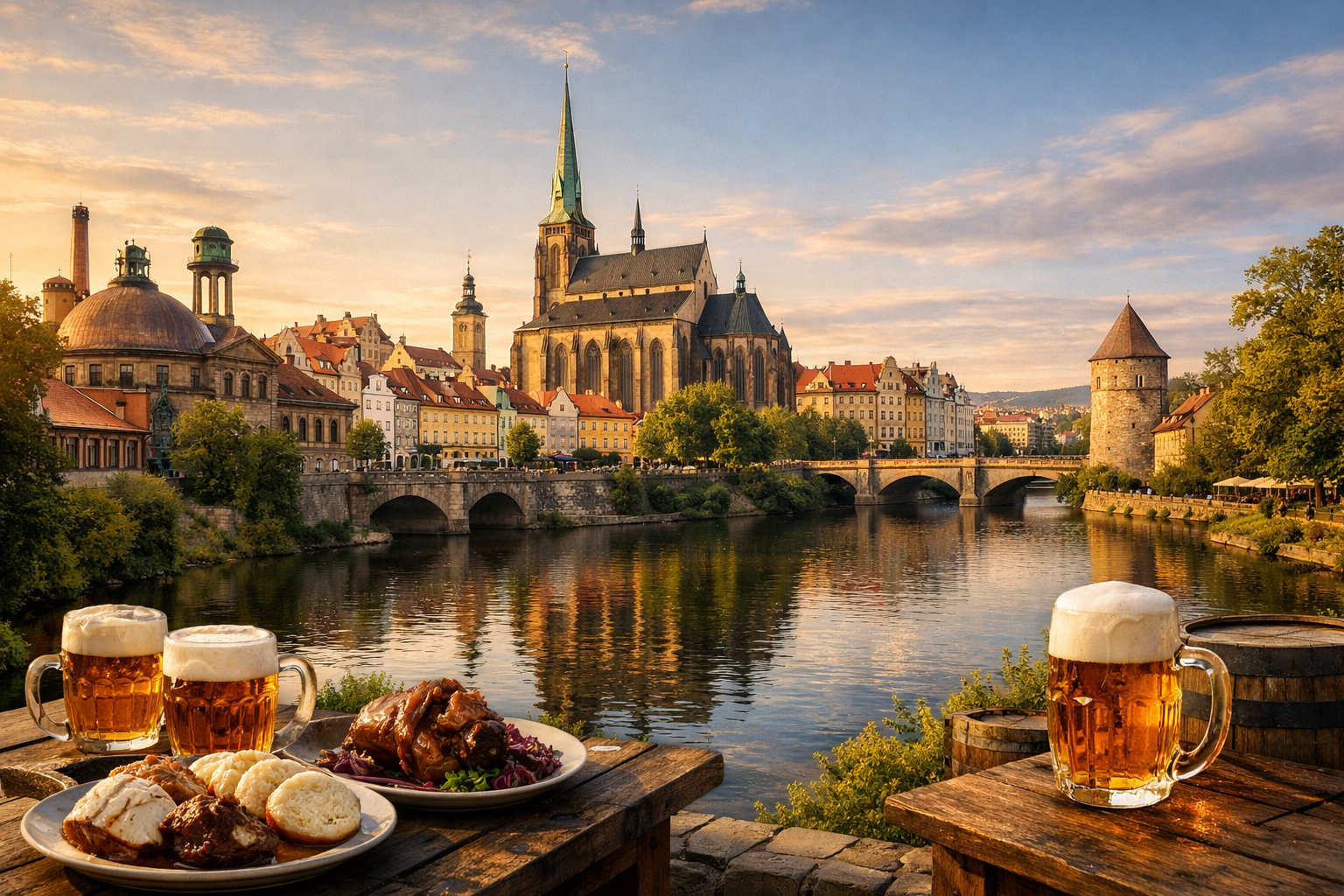
Day 1 — Old Plzeň: market, taverns, and the history of a beer city
🚶 Begin your gastronomic introduction to Plzeň in the historic center — around náměstí Republiky and the surrounding streets, where the character of West Bohemia is especially vivid: dense stone buildings, old facades, cathedral spires, beer signs, and a steady feeling that the city has lived for centuries to the rhythm of craft, trade, and cuisine. It’s best to devote the morning to a relaxed breakfast and a walk along the central streets, and if your visit falls on a market day, be sure to stop by the local farmers’ stalls: here you may find regional cheeses, baked goods, sausages, seasonal vegetables, honey, jams, and artisanal products. Even if there is no full market on a particular day, the center itself remains the best area for a food tour: everything is compact, it’s easy to walk between stops, and short 5–15 minute walks won’t overload the route.
🍽️ For lunch, it makes sense to choose one of Plzeň’s trusted classics right in the center — for example, U Salzmannů or Restaurace U Mansfelda, where it’s convenient to try traditional Czech cuisine without excessive tourist bustle. The focus of the day is Bohemian meat dishes: roast pork, duck, beef in sauces, roasted meats, pork knuckle, goulash, and of course dumplings in different varieties. In Plzeň, the dumpling is not just a side dish but part of the cultural code: bread dumplings, potato dumplings, sometimes denser and more “homestyle,” they work as the ideal companion to thick gravies and stewed meat. For those who do not eat pork or prefer lighter dishes, it is usually possible to choose chicken, fish, fried cheese, soups, or salads; in traditional restaurants, it is also wise to check in advance about gluten-free and vegetarian options, because the city’s classic menu is still noticeably centered on meat and flour-based sides.
🏛️ After lunch, take a cultural break at the Brewery Museum, Veleslavínova 6, 301 00 Plzeň, and then, if you wish, descend into the Plzeň Historical Underground, whose entrance is organized from the same building. This is one of the best ways to understand why Plzeň became not just a city of beer, but a city of beer civilization. The exhibition tells not only about brewing, malt, and barrels, but also about the professions without which the beer economy could not exist: coopers, carters, tavern owners, and cellar masters. The underground passages add an almost cinematic dimension to the route: cool air, brick vaults, and old corridors used for storing food, ice, and beer make the city’s history physically tangible. It is reasonable to allow about 2–2.5 hours for the museum and underground visit, including entry, waiting time, and an unhurried pace.
🍺 Dedicate the evening to beer culture as a gastronomic ritual, not just a tasting. If you want to connect dinner with the city’s identity, a good ending to the first day is dinner at Na Spilce on the brewery complex grounds. This vast space, set in former fermentation cellars, offers a rare chance to dine literally inside the city’s beer history. Here it is fitting to order classic Czech dishes in a more modern presentation and pair them with fresh Plzeň beer. For couples and groups of friends, this is an especially good location: the atmosphere is festive but not stiff, and after a full day the return to the center is usually easy — about 20–25 minutes on foot or a short ride on public transport. If you plan dinner at a popular time, it is better to reserve a table in advance, especially on Friday, Saturday, and during the high tourist season.